Sunday, February 22, 2015
Just a snapshot
I've neglected to write anything for quite sometime, and that was mainly because of all the stress that I went through during my stint in the Obstetrics/Gynaecology Department, but I've finally moved on to a slightly less hectic department: Internal Med.
Suffice it to say, the experience did nothing to sway me away from considering a specialty in Surgery. (I've only just managed to get over the episode of PTSD induced by the whole experience.
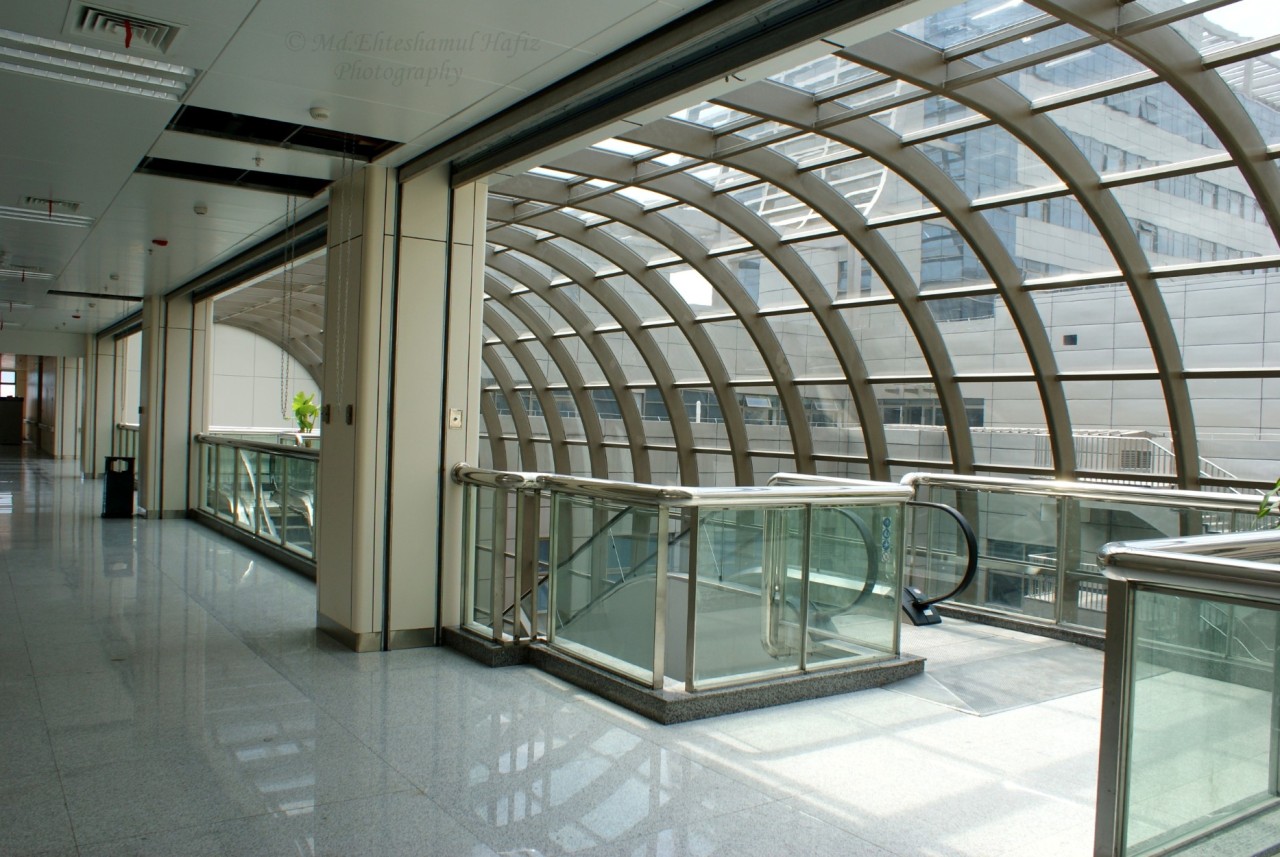
While I have been neglecting the blog, I managed to finally open a Tumblr account - http://wmu1ah.tumblr.com - and started to do something I should have done 2 years ago: putting the 'Compendium' pictures of the 1st Affiliated Hospital online (similar to the one shown on this post). During my last year at Medical school, a group of us invested hours and hours of our time putting together this massive project that would highlight the new 3,300 bed hospital and, in turn, bring much need attention to our medical school.
Personally, that project is all at once one of my greatest accomplishments and greatest failures. At this point, it's easier to ruminate on the failure, because, honestly, these pictures are coming out 2 years too late; I can't even begin to think of all the other compiled work that is sitting on multiple computers, idle, serving no useful purpose. Whatever the long story behind the whole process, I'm glad that I still have Tumblr to show some semblance of what we hoped to achieve.
My most heartfelt thanks go to all members of Compendium who helped with all the major lifting, particularly Hafiz, our trusty photographer, whose great skill shines through in this particular Tumblr.
Now that I have this bit of work off my chest, I can find another hobby to occupy my mind.
God Bless.
Saturday, September 27, 2014
The Music of Pat Metheny - Everyday, I Thank You
I had usually skipped this piece whenever I came across it in my playlist. The long drag from Michael Brecker's sax usually implied to me that this would be a depressing piece (...and this one certainly is long, coming in at a full 13.5 minutes).
Thankfully, one day I just let the shuffle button do its thing in my PMG playlists, and I had a chance to listen to the piece in its entirety. It is by all means exquisite; a ballad perfectly crafted. Starting out with the song's chorus framed by an ethereal pipe synth portion, Michael Brecker paints us an eloquent picture, and in a quickening of pace, Mr. Metheny adds yet more pastels to the song. (Love that rubato!)
If memory serves me right, it was Pat who wrote this song, but from listening to it, it's clear that the good relationship he had with his late friend allowed them to concoct pure magic. Mike Brecker is front-and-centre on this tune, but Pat is never far behind - each of them coming in to accentuate different portions of the song. Every bit of this song just works. If the title of the song is anything to go by, they really expressed their gratitude as sincerely as could possibly be done. And in turn, I thank God, everyday, for this music which conveys sentiments that cannot be described adequately through wording.
Everyday, Father, I thank you.
Thankfully, one day I just let the shuffle button do its thing in my PMG playlists, and I had a chance to listen to the piece in its entirety. It is by all means exquisite; a ballad perfectly crafted. Starting out with the song's chorus framed by an ethereal pipe synth portion, Michael Brecker paints us an eloquent picture, and in a quickening of pace, Mr. Metheny adds yet more pastels to the song. (Love that rubato!)
If memory serves me right, it was Pat who wrote this song, but from listening to it, it's clear that the good relationship he had with his late friend allowed them to concoct pure magic. Mike Brecker is front-and-centre on this tune, but Pat is never far behind - each of them coming in to accentuate different portions of the song. Every bit of this song just works. If the title of the song is anything to go by, they really expressed their gratitude as sincerely as could possibly be done. And in turn, I thank God, everyday, for this music which conveys sentiments that cannot be described adequately through wording.
Everyday, Father, I thank you.
Wednesday, August 27, 2014
Rant: The Registrar of Companies
This is the second time I'm having to deal with the Registrar of Companies at Sheria House, and I cannot claim that the experience is any less painful than the last time. In my previous post, I had mentioned that I already knew the necessary steps required to initiate my business. As usual, the lynch pin was the people manning the counters at Sheria House.
This past Monday, armed with a new name for the business - "Aykornia" or "Aykornium" - I wanted to run the prerequisite name search. Would you believe the Registrar has only one desk dedicated to this process (Counter 1 - File Perusal/Name Preservation); to cap it off, at 10.30am the employee-in-charge of the counter just got up and left, leaving a growing number of us in a queue stranded! And these things aren't complete unless they come in a
trifecta: some of the employees from the other counters who glanced at my desired company name told me that my company name HAD to consist of at least 2 words.
My complaint concerning these 3 issues remain unchanged from my last post, and I'll put them down here again. First, Counter 1 is redundant and can literally be manned by even a trained high school student who would only be required to receive your application and give you a slip allowing you to pay for the transaction. It would even be more effective to actually digitize the procedure to ease the whole process and decongest the registration hall. These two mere measures would free up the people manning the counter to 'possibly' make themselves useful somewhere else.
And I've said it once,and I'll say it again: some sort of guide needs to be published to assist fledgling entrepreneurs concerning the idiosyncratic rules governing setting up businesses. I am tired of having random clerks randomly chipping in with ad hoc rules that complicate an already complex and infuriating process. I would like to think that any worker worth their salt would strive to improve the processes associated with thir work stations, but it is becoming clear that some of these civil revel in the confusion; others just do not care enough to want to change anything.
The last time I went to Sheria House, a guard at the gate approached me and basically offered to 'expedite' the process if I basically 'greased his fingers'. The corollary is that if his fingers are 'greased', someone else on the inside is also having their fingers 'greased'. The only other option is to have a lawyer bulldoze through this process for you, and that certainly doesn't come cheap.
So for the clerks, the modus operandi is just frustrate! frustrate! frustrate! the common mwananchi.
I hear people talk about how easy it is to start a business in Rwanda - a maximum 3 days (even for foreigners) to have the legal documentation in their hands. I compare this to Kenya and think that there's nothing really special involved here. Just Discipline and the ability to understand that allowing business to flourish in Kenya is good for the country as a whole. However, if the current civil servants can't understand that, they need to be sent packing instead of positioning themselves as stumbling blocks in everyone else's path.
That's my 2 cents for today. God help us all (especially if we have to go to the Registrar of Companies offices)
This past Monday, armed with a new name for the business - "Aykornia" or "Aykornium" - I wanted to run the prerequisite name search. Would you believe the Registrar has only one desk dedicated to this process (Counter 1 - File Perusal/Name Preservation); to cap it off, at 10.30am the employee-in-charge of the counter just got up and left, leaving a growing number of us in a queue stranded! And these things aren't complete unless they come in a
trifecta: some of the employees from the other counters who glanced at my desired company name told me that my company name HAD to consist of at least 2 words.
My complaint concerning these 3 issues remain unchanged from my last post, and I'll put them down here again. First, Counter 1 is redundant and can literally be manned by even a trained high school student who would only be required to receive your application and give you a slip allowing you to pay for the transaction. It would even be more effective to actually digitize the procedure to ease the whole process and decongest the registration hall. These two mere measures would free up the people manning the counter to 'possibly' make themselves useful somewhere else.
And I've said it once,and I'll say it again: some sort of guide needs to be published to assist fledgling entrepreneurs concerning the idiosyncratic rules governing setting up businesses. I am tired of having random clerks randomly chipping in with ad hoc rules that complicate an already complex and infuriating process. I would like to think that any worker worth their salt would strive to improve the processes associated with thir work stations, but it is becoming clear that some of these civil revel in the confusion; others just do not care enough to want to change anything.
The last time I went to Sheria House, a guard at the gate approached me and basically offered to 'expedite' the process if I basically 'greased his fingers'. The corollary is that if his fingers are 'greased', someone else on the inside is also having their fingers 'greased'. The only other option is to have a lawyer bulldoze through this process for you, and that certainly doesn't come cheap.
So for the clerks, the modus operandi is just frustrate! frustrate! frustrate! the common mwananchi.
I hear people talk about how easy it is to start a business in Rwanda - a maximum 3 days (even for foreigners) to have the legal documentation in their hands. I compare this to Kenya and think that there's nothing really special involved here. Just Discipline and the ability to understand that allowing business to flourish in Kenya is good for the country as a whole. However, if the current civil servants can't understand that, they need to be sent packing instead of positioning themselves as stumbling blocks in everyone else's path.
That's my 2 cents for today. God help us all (especially if we have to go to the Registrar of Companies offices)
Friday, August 22, 2014
My Fascination with Kickstarter
![]() |
| Aurora |
Since discovering it late last year, I must admit that Kickstarter has evolved to become a major part of my daily internet read. I can't lie, their webpage design endears itself to many allowing for many joyous hours of reading pleasure. Far better than that though is the varied number of stories of mastery of a myriad of crafts, and the great amount of work that goes into crafting each product.
I usually spend my time perusing 3 different categories: Design, Comics and Technology; there are a lot more sections to pick from, but I find myself drawn to these ones in particular. There is truth to the saying, "Necessity is the mother of all invention"; as long as there will be a ton of problems to solve, there will always be forward-thinking innovators who can anticipate solutions to those same problems. The big question is whether they can make any money off those solutions.
One project that was particularly elegant in design was the Muse Clock by Nate Borozinski. True, this is merely a wall mounted clock, but the new spin he took on this idea is an artistic marvel.
![]() |
| Dome Lamp |
![]() |
| Plumen 002 |
However, my ultimate favourite has to be Palm Republik by Peisy. Malaysia, the country she hails from, produces a lot of the world's Oil Palm, which thus results in a lot of biomass waste. Malaysia, in the same vein, is also researching into various ways of utilizing this waste - and their most promising product is Palm Paper. Peisy took this one step further, building a company around novelty designs made from Palm Paper.
Just like Palm Republik, I too have the idea of moulding the concepts I laid out in "The Hyacinth Economy" into a business (tentatively titled "The Hyacinth Lab"). Those aspirations will have to be postponed because my current medical internship does not leave me with any spare time to pursue the needed research...but at least the dream is still alive and kicking.
The Comics section is a visual joy because the authors usually leave snippets of their works in progress in form of comic pages, illustrations and synopsis accounts. I've had the beginnings of a graphic novel swirling around in my mind for 2 years now, so with a little inspiration I think I could put pen to paper and come up with quite a delightful read. With a finished story, I could start looking for an illustrator of repute.
But as the aspirations wait, at least I'm being inspired a little more everyday. It's been almost 9 years since I wrote my paper on Hyacinth & Phytoremediation; about 1.5 years ago, I finished my paper of "The Hyacinth Economy", and now I can picture it as a potential full-fledged business. Who knows! Sooner, rather than later, I just might throw my hand in along with the rest of the entrepreneurs; but till that day comes, at least I've got Kickstarter.
God Bless.
Sunday, August 17, 2014
Ode to Rain
Living in Kisii, you have to come to terms with the sheer amount of rain that they experience around here. You can't go more than 4 days without having a serious downpour, and lately it rains everyday: intense rain, the kind that keeps you locked indoors, usually lasting more that an hour; oh, and it rains twice!
I was simply astounded how we never ended up with any floods around here. Sometimes the place is practically bone-dry in the morning; and worst of all, at my old place we always had water shortages (mind-boggling)!
Rain is a Catch-22 kind of thing: you really suffer if it doesn't rain enough, but, then when your prayers are answered and it finally rains, then you have to scamper away and keep from getting drenched; in addition, if your paths are poorly paved, then you have to deal with lots of mud everywhere; and, if drainage in your area is poor, then you have flooding and stagnating pools of water all around. It's the kind of thing to keep people cursing both in-season and out-of-season.
There's no getting away from the fact that rain is life; and it's not like human comfort is the gold standard for all things beneficial, but I would love for these two seemingly disparate entities (beneficial water & human enjoyment) to come together for once. I remember as a child that there was no stopping me from running in the rain and playing in puddles. Pretty sure the farmers rejoice too, because it means their crops get to flourish. I feel that most people, however, don't fall into these two classes, but there's still a way to reach out to everyone.
I am no artist, in any sense of the word,...but I do have artistic sentiments aplenty. My current fixation revolves around giving a practical impression of beauty to each rain storm. Rain is already inherently beautiful, if you have the comfort of watching it from a dry sheltered spot. What I'm aiming for is a monument that can be appreciated at anytime, but which would be specially animated by a rainstorm. It could be something as simple as a statue that becomes a functional fountain in times of rain; or maybe something resembling a turbine, whose blades could be spun by the action of moving water, lending movement to another very visible piece.
One item I found while leafing though "Street Furniture" by Chris van Uffelen was particularly inspiring: it consisted of two installations by an artist - Stacy Levy - who used a portion of sidewalk art/map to highlight the watershed of the locale. Once it rained, the flowing water accentuated the lakes & rivers, turning the map into a great focal point. These two installations are known as "Water Map" & "Ridge and Valley".
So for now, I have an inkling of a vision in my mind. Maybe someday I can pair up with someone who can bring it to fruition (...technically anyone who reads this). In the meantime, just thanking God for the rain, and hoping for a sprinkling of some of that childhood innocence; the kind that kept me enthralled by the beauty of the rain.
God Bless
Addendum: while going through Stacy Levy's site, I found yet another piece - Arroyo - built around this same rain motif. It's one I would really love to explore with local artists.
I was simply astounded how we never ended up with any floods around here. Sometimes the place is practically bone-dry in the morning; and worst of all, at my old place we always had water shortages (mind-boggling)!
Rain is a Catch-22 kind of thing: you really suffer if it doesn't rain enough, but, then when your prayers are answered and it finally rains, then you have to scamper away and keep from getting drenched; in addition, if your paths are poorly paved, then you have to deal with lots of mud everywhere; and, if drainage in your area is poor, then you have flooding and stagnating pools of water all around. It's the kind of thing to keep people cursing both in-season and out-of-season.
There's no getting away from the fact that rain is life; and it's not like human comfort is the gold standard for all things beneficial, but I would love for these two seemingly disparate entities (beneficial water & human enjoyment) to come together for once. I remember as a child that there was no stopping me from running in the rain and playing in puddles. Pretty sure the farmers rejoice too, because it means their crops get to flourish. I feel that most people, however, don't fall into these two classes, but there's still a way to reach out to everyone.
I am no artist, in any sense of the word,...but I do have artistic sentiments aplenty. My current fixation revolves around giving a practical impression of beauty to each rain storm. Rain is already inherently beautiful, if you have the comfort of watching it from a dry sheltered spot. What I'm aiming for is a monument that can be appreciated at anytime, but which would be specially animated by a rainstorm. It could be something as simple as a statue that becomes a functional fountain in times of rain; or maybe something resembling a turbine, whose blades could be spun by the action of moving water, lending movement to another very visible piece.
One item I found while leafing though "Street Furniture" by Chris van Uffelen was particularly inspiring: it consisted of two installations by an artist - Stacy Levy - who used a portion of sidewalk art/map to highlight the watershed of the locale. Once it rained, the flowing water accentuated the lakes & rivers, turning the map into a great focal point. These two installations are known as "Water Map" & "Ridge and Valley".
![]() |
| Ridge & Valley (Stacy Levy) |
God Bless
Addendum: while going through Stacy Levy's site, I found yet another piece - Arroyo - built around this same rain motif. It's one I would really love to explore with local artists.
Friday, August 8, 2014
On Strike!
As a fledgling Medical Officer intern, barely 2 months into my 1-year internship, I knew it would only be a matter of time before a strike came calling along. Actually the seeds of a strike never are too far away around here. I at least expected the strike would involve this unnecessarily hurried push that the counties are making towards devolving healthcare (practically a whole 2 years ahead of schedule). Kenyan institutions (particularly governmental ones) are not renowned for their efficiency; thus the general consensus is that devoid of proper systems, they just want to gobble up the medical funds (more speculation on that at another point in time).
This current juncture finds me dealing with a problem rooted in the old health system. We have an old tradition here, probably retained from colonial times, whereby you don't get paid for the first 3 months of work. After that, you receive the money for those 3 months in a big lump sum. I'm not exactly fond of this system considering that I was plucked from my usual stomping ground and deposited 6 hours drive away in Kisii, a town which I had barely passed through twice before. Even worse was the fact that I was only given a mere week in which to finalize all formalities, pack up my belongings, find a new house, and to be ready to report for duty. My Medical Superintendent basically told me that there was no way he could give me any more time to sort myself out because he had basically put me on payroll from the moment I showed up.
To tell you the truth, I felt the whole introductory portion could've been handled better, but then I was grateful to at least have a job offer. I didn't want to end up like my friends who had to wait a whole year before they were posted in April of this year. I'm glad my family cushioned my transition with all their encouragement and generous funding, which still continues till today.
However, it feels painful for the government to renege on an agreement like this. The current excuse they're using is that they have to weed out any 'Ghost Workers', so they basically have to show up at all internship centres to do a PHYSICAL head count of the interns. I get some of their logic, but it just boggles my mind that this is the same government that was supposedly elected on a "Digital" platform, yet they are just as inefficient as previous regimes. People might think I'm criticizing for critisicm's sake, but for your information I've had to submit piles of paperwork (going as far back as my primary school leaving certificate), all of which had to be filed with both the County and National Governments. It is unreasonable that I thus have to wait for officials from Nairobi - a whole 6 hours away - to complete their week-long or month-long (whichever) trip around this country to come seek me out.
Any other stories coming up about lateness in releasing funds are even harder to stomach considering the amount of funds wasted on vanity-affairs of our politicians or the fiscal irresponsibility displayed by government coffers. It is worrying that this is how one of the most essential services in the country, catering to the vast number of people unable to buy insurance, is run. They owe the people more than that...they owe the medical fraternity more than that. No professionals spend more hours in the service of the public, exposed to death and the deadliest of diseases on a regular basis, and still come out as under-appreciated.
There is great need to reform the public health system, if only for the simple reason that all citizens - rich or poor - could possibly end up as our patients. People forget that should they become incapacitated and have the misfortune to lose their wallets/purses containing their identification papers, premium health cards, etc., their destination is bound to be the public hospitals. That should be a scary notion for anyone to entertain under the current circumstances; you can't expect frustrated overworked workers to deliver the kind of services you would be proud of, so more needs to be done to relieve what is already a massively stressful job.
I'm not proud of the strike at all, but I'll follow up with it to give my fellow clinicians - who've been at this a whopping 4 months! - the numbers they need to make a painfully obvious point. In 5 days, hopefully this strike will be a thing of past, and I can then get back to my Surgical rotation, which I live for. Until then, I get a little "me-time" for myself. God Bless
This current juncture finds me dealing with a problem rooted in the old health system. We have an old tradition here, probably retained from colonial times, whereby you don't get paid for the first 3 months of work. After that, you receive the money for those 3 months in a big lump sum. I'm not exactly fond of this system considering that I was plucked from my usual stomping ground and deposited 6 hours drive away in Kisii, a town which I had barely passed through twice before. Even worse was the fact that I was only given a mere week in which to finalize all formalities, pack up my belongings, find a new house, and to be ready to report for duty. My Medical Superintendent basically told me that there was no way he could give me any more time to sort myself out because he had basically put me on payroll from the moment I showed up.
To tell you the truth, I felt the whole introductory portion could've been handled better, but then I was grateful to at least have a job offer. I didn't want to end up like my friends who had to wait a whole year before they were posted in April of this year. I'm glad my family cushioned my transition with all their encouragement and generous funding, which still continues till today.
However, it feels painful for the government to renege on an agreement like this. The current excuse they're using is that they have to weed out any 'Ghost Workers', so they basically have to show up at all internship centres to do a PHYSICAL head count of the interns. I get some of their logic, but it just boggles my mind that this is the same government that was supposedly elected on a "Digital" platform, yet they are just as inefficient as previous regimes. People might think I'm criticizing for critisicm's sake, but for your information I've had to submit piles of paperwork (going as far back as my primary school leaving certificate), all of which had to be filed with both the County and National Governments. It is unreasonable that I thus have to wait for officials from Nairobi - a whole 6 hours away - to complete their week-long or month-long (whichever) trip around this country to come seek me out.
Any other stories coming up about lateness in releasing funds are even harder to stomach considering the amount of funds wasted on vanity-affairs of our politicians or the fiscal irresponsibility displayed by government coffers. It is worrying that this is how one of the most essential services in the country, catering to the vast number of people unable to buy insurance, is run. They owe the people more than that...they owe the medical fraternity more than that. No professionals spend more hours in the service of the public, exposed to death and the deadliest of diseases on a regular basis, and still come out as under-appreciated.
There is great need to reform the public health system, if only for the simple reason that all citizens - rich or poor - could possibly end up as our patients. People forget that should they become incapacitated and have the misfortune to lose their wallets/purses containing their identification papers, premium health cards, etc., their destination is bound to be the public hospitals. That should be a scary notion for anyone to entertain under the current circumstances; you can't expect frustrated overworked workers to deliver the kind of services you would be proud of, so more needs to be done to relieve what is already a massively stressful job.
I'm not proud of the strike at all, but I'll follow up with it to give my fellow clinicians - who've been at this a whopping 4 months! - the numbers they need to make a painfully obvious point. In 5 days, hopefully this strike will be a thing of past, and I can then get back to my Surgical rotation, which I live for. Until then, I get a little "me-time" for myself. God Bless
Monday, April 14, 2014
Ideas: The Chronic Conditions Card
Warm greetings to everyone out there. My current pre-internship at one of Nairobi’s District Hospitals currently occupies a lot of my time (…and let’s not even get into the 3-4 hours I spend in traffic each day), and so it is ideal that I should give you a slice of exactly what it entails.
Now, my previous pre-internship was at Kenya’s main referral hospital – The Kenyatta National Hospital (KNH) – and, suffice it to say, it was an eye-opening experience. Having only been to private hospitals anytime I’ve been ill, Kenyatta Hospital afforded me a chance to see the best the public health sector had to offer, which surprisingly is alright. KNH is usually in the headlines for all the wrong reasons, but it is a creature of wrongful circumstance; given the right kind of resources and backed by adequate political will, KNH could rightfully live up to its reputations as “East & Central Africa’s Largest Referral Hospital”.
True to my nature, while I was at KNH, I complained about the inefficiencies that I came across; however, I usually complain about things that, in my opinion, are rather easy fixes …surely there can’t be anything more frustrating than being pummeled by easily solvable problems. But as my friend Maria would keep on telling me, there is definitely much worse that I could be facing at Kenya’s myriad public hospitals; and after this stint at the District Hospital, I can see that she was totally right.
The public health system is understaffed, overwhelmed and faces shortages of essential drugs, equipment and linen that are required to save lives …or at least just make it more manageable during the convalescence period. One source of inefficiency is the crux of this blog, and it is by nature more of a ‘medical speak’ vs ‘layman’ conundrum. Every day at the hospital, we are faced with patients suffering from diseases like Diabetes, HIV or TB, and in one way or another the situation tends to play out the same. In treating any sort of chronic disease, the clinician needs to determine the history and severity of the disease condition, determine a baseline for the patient’s health parameters since the inception of treatment, and come up with the best drug regimen for the disease at hand.
In the case of HIV/AIDS, the doctor is looking for the date of the patient’s HIV diagnosis, presenting complaint (Skin lesions, TB, Meningitis, etc), CD4 count & Viral Load, and Anti-Retroviral medication (ARVs). To a clinician this is just the nature of the business; however, patients are typically plagued by a bunch of problems, not least of which is confusion/denial about their HIV diagnosis, ignorance of their most recent CD4 counts or viral load values, and forgetfulness concerning their current drug regimen. Again, in this regard, I can’t really blame the patients because a lot of them have a very limited grasp of the medical concepts behind their problem and its relevant medication; it is also a great exercise in wishful thinking to expect them to remember laboratory values for tests that were carried out almost 6 months prior to the juncture at which you encounter them at the hospital. One last problem is that the patients usually migrate to different parts of the country, meaning their condition is handled at various Comprehensive Care Centres (CCCs), and between these centres they usually tag along a tattered small blue card that relays some information concerning their status.
Using only HIV as an example, you can get a semblance of what clinicians have to deal with when treating chronic conditions at the hospital; things like Hepatitis, Diabetes, TB, Cancer, Chronic Lung Disease or Autoimmune conditions. Since the educational levels of patients runs the full gamut from illiterate to well educated, I think some measure should be put in place to simplify this whole process, entrusting the specialized details to the medical professionals so that treatment need not be hindered by any of the patient factors I have previously listed.
The best solution to this, I believe, would be the creation of a Chronic Conditions Card (CC Card). This would be a machine readable card – that uses the patient’s ID Number as a keyword - that would store the patient’s relevant details, Disease vital statistics and current drug regimen information. This would ensure that the details of any patient suffering from a chronic disease would be handled through a digital database and should be available to any clinician when required.
As we strive to gain some control over Chronic diseases – both communicable (Hepatitis, TB, HIV) and non-communicable (Diabetes, Autoimmune conditions, Cancer) – this notion of a CC Card and the associated database would give us a clear-cut method of tallying these disease sufferers, thus giving us an estimate of the kind of resources and financing that need to be put towards alleviating them.
The biggest hindrance to rolling out this card is probably the limited computer availability in most of Kenya’s hospitals. This would be one of those areas where political will could really make a big difference. I daresay that a mere fraction of the money intended to roll out The Primary School Laptops project would be enough to minimally computerize the country’s hospitals towards this end. In the short term, I’m pretty sure someone with basic IT skills could find some way to make a very basic mobile phone app that could interface with a national database, thus relaying the results where needed. It’s all still a basic idea right now, but I’m sure it is very workable and would save lives in the long run (which is the meat-and-potatoes of medical practice, in any case). Hope you have a great day. God Bless
Now, my previous pre-internship was at Kenya’s main referral hospital – The Kenyatta National Hospital (KNH) – and, suffice it to say, it was an eye-opening experience. Having only been to private hospitals anytime I’ve been ill, Kenyatta Hospital afforded me a chance to see the best the public health sector had to offer, which surprisingly is alright. KNH is usually in the headlines for all the wrong reasons, but it is a creature of wrongful circumstance; given the right kind of resources and backed by adequate political will, KNH could rightfully live up to its reputations as “East & Central Africa’s Largest Referral Hospital”.
True to my nature, while I was at KNH, I complained about the inefficiencies that I came across; however, I usually complain about things that, in my opinion, are rather easy fixes …surely there can’t be anything more frustrating than being pummeled by easily solvable problems. But as my friend Maria would keep on telling me, there is definitely much worse that I could be facing at Kenya’s myriad public hospitals; and after this stint at the District Hospital, I can see that she was totally right.
The public health system is understaffed, overwhelmed and faces shortages of essential drugs, equipment and linen that are required to save lives …or at least just make it more manageable during the convalescence period. One source of inefficiency is the crux of this blog, and it is by nature more of a ‘medical speak’ vs ‘layman’ conundrum. Every day at the hospital, we are faced with patients suffering from diseases like Diabetes, HIV or TB, and in one way or another the situation tends to play out the same. In treating any sort of chronic disease, the clinician needs to determine the history and severity of the disease condition, determine a baseline for the patient’s health parameters since the inception of treatment, and come up with the best drug regimen for the disease at hand.
In the case of HIV/AIDS, the doctor is looking for the date of the patient’s HIV diagnosis, presenting complaint (Skin lesions, TB, Meningitis, etc), CD4 count & Viral Load, and Anti-Retroviral medication (ARVs). To a clinician this is just the nature of the business; however, patients are typically plagued by a bunch of problems, not least of which is confusion/denial about their HIV diagnosis, ignorance of their most recent CD4 counts or viral load values, and forgetfulness concerning their current drug regimen. Again, in this regard, I can’t really blame the patients because a lot of them have a very limited grasp of the medical concepts behind their problem and its relevant medication; it is also a great exercise in wishful thinking to expect them to remember laboratory values for tests that were carried out almost 6 months prior to the juncture at which you encounter them at the hospital. One last problem is that the patients usually migrate to different parts of the country, meaning their condition is handled at various Comprehensive Care Centres (CCCs), and between these centres they usually tag along a tattered small blue card that relays some information concerning their status.
Using only HIV as an example, you can get a semblance of what clinicians have to deal with when treating chronic conditions at the hospital; things like Hepatitis, Diabetes, TB, Cancer, Chronic Lung Disease or Autoimmune conditions. Since the educational levels of patients runs the full gamut from illiterate to well educated, I think some measure should be put in place to simplify this whole process, entrusting the specialized details to the medical professionals so that treatment need not be hindered by any of the patient factors I have previously listed.
The best solution to this, I believe, would be the creation of a Chronic Conditions Card (CC Card). This would be a machine readable card – that uses the patient’s ID Number as a keyword - that would store the patient’s relevant details, Disease vital statistics and current drug regimen information. This would ensure that the details of any patient suffering from a chronic disease would be handled through a digital database and should be available to any clinician when required.
As we strive to gain some control over Chronic diseases – both communicable (Hepatitis, TB, HIV) and non-communicable (Diabetes, Autoimmune conditions, Cancer) – this notion of a CC Card and the associated database would give us a clear-cut method of tallying these disease sufferers, thus giving us an estimate of the kind of resources and financing that need to be put towards alleviating them.
The biggest hindrance to rolling out this card is probably the limited computer availability in most of Kenya’s hospitals. This would be one of those areas where political will could really make a big difference. I daresay that a mere fraction of the money intended to roll out The Primary School Laptops project would be enough to minimally computerize the country’s hospitals towards this end. In the short term, I’m pretty sure someone with basic IT skills could find some way to make a very basic mobile phone app that could interface with a national database, thus relaying the results where needed. It’s all still a basic idea right now, but I’m sure it is very workable and would save lives in the long run (which is the meat-and-potatoes of medical practice, in any case). Hope you have a great day. God Bless
Tuesday, December 10, 2013
Politicians in Churches
In (Catholic) High School,
my Religious Studies teacher once told me the story of a Priest who
had been called to the Royals’ Castle so that he might hear the
Queen’s confession. When he got there, the Queen was seated, as
opposed to the tradition which demanded that the Priest be seated and
the Confessee standing. Unashamedly, the Priest reminded her of this
fact; however, the Queen insisted that because of her station she was
justified in sitting. To end this all the Priest calmly replied,
‘I am the Confessor, and you are the Sinner….so you will stand as tradition dictates!’
It seemed like a
harsh teaching back then, but I understand its importance now. The
notion of (Catholic) confession may not be something that everyone
understands, but the act of submitting to someone whose authority
dwarfs yours is a Cultural Universal. This
is why the penchant of Kenyan politicians for commandeering all
manner of religious services (especially Funerals) and converting
them into ad hoc political rallies to discuss the politics of the day
is an extremely embarrassing affair.
I remember about 8
years ago that my paternal Grandfather passed away, and so I
accompanied my mother as she made arrangements for his burial at the
village. At the town centre where we wanted to rent chairs, some
fledgling politician insisted that he would ensure the chairs were
rented to us at a cheaper price so long as we allowed him to address
the funeral congregation. My mother flatly refused and got the chair
at full price, no-strings-attached. Would
you believe that idiotic politician still had the gumption to show up
to address the congregants, dishonoring my Grandfather’s memory.
On the one hand, as the
village level, I can understand that funerals bring the community
together, therefore they can serve as useful venues for the local
administration to discuss issues of public welfare (sanitation,
clinics, nutrition, etc.); BUT, it serves no purpose whatsoever to
have the occasion turned into a fanfare, discussing issues totally
unrelated to the moment at hand. As far as I’m concerned, the
deceased person, and the bereaved (particularly closest family and
friends) take centre stage.
Unfortunately, this
misbehavior is not confined merely to the villages; it is spread far
and wide, from villages to cities and from funerals to Sunday church
services. As my sister puts it, at her
church - which a prominent politician also happens to attend - the
church leaders will invite him to the podium to ‘greet’ the
congregation. So, in this case, the church is wholly complicit in
having the politician appropriate the ceremony for the sake of the
perceived prominence he imparts to the church.
Something is terribly
wrong here, and the sooner the multitudes realize it, the quicker we
can set about remedying the problem. A pastor/priest’s
responsibility of guiding the flock is divine and distinctly
recognized by society, and should not be encroached upon. In much the
same way that a non-doctor cannot superimpose himself on a doctor’s
diagnostic work, or a non-Engineer place himself over that Engineer’s
professional dictates… or even a non-Mechanic bulldoze the work of
a competent professional Mechanic, it is just as wrong to encroach on
Pastoral work.
If we continue to
let politicians run roughshod over religious ceremonies, we risk
turning the Church into that debacle listed in James 2:1-13. When I
sit in a congregation and a politician happens to be in attendance,
there is no difference between Him/Her and me…
end of story… it is BIBLICAL! Any contravention of that fact
(clearly stated in the latter parts of the New Testament) is an
outright sin.
And so my lesson
from the ‘Queen and her Confessor’ has come full circle. The
moral is TO KNOW YOUR PLACE, and to stick to what pertains to that
station, regardless of who you are in this life.
God Bless.
Peace and Conflict Resolution
A friend from High
School visited me a while back, and as we were ‘shooting
the breeze’ he told me about his latest career move: going to the
US to pursue a major in Peace and
Conflict Resolution. This conversation
would of course shift to the Kenyan context and how this particular
skill is needed to settle the constant tensions and flare-ups that
are common in certain areas of Kenya (the volatile North in
particular). More so, after the display in diplomacy exhibited by
some Northern Leaders during the verbal joust on NTV, it would seem
that this is surely the way to go.
On that day, I was
something of a ‘wet blanket’ to my friend’s ambitions. I’m
not saying that I discouraged is pursuit of this much needed field of
study; rather, it was his broad-stroke application of peace and
conflict resolution to all that ails the troubled land that I had an
issue with.
Let me explain: I’m
pretty sure people are in need of healing, justice and reconciliation
because clashes stretching a long way back and emotional or physical
hurts visited upon them by their neighbours are a vivid reality to
these people. However, approaching this from a peace and
reconciliation mindset is to simply apply a salve over a festering
wound. The background story to many of these regions is that they are
grossly underdeveloped, far-flung and neglected. Public services are
sorely lacking, and one’s safety is not guaranteed…and let’s
not forget their economic isolation. Pair this up with the practice
of Nomadic Pastoralism, and communities that have inculcated a
tradition of Cattle Rustling (compounded by a proliferation of arms
in the area from our insecure Northern neighbours (Somalia) and you
come close to approximating the powder keg that this regions really
are.
The real problem
here is Economic, and also stems from a lack of safety. Economic
isolation is reflected in the poor educational standards, retention
of traditions that are probably no longer useful as is (Pastoralism),
and failure to adapt to new market opportunities. Nomadic
pastoralism, particularly cross-border en masse transport of animals
is a particularly bad idea ; not only are
the massive herds an encouragement for rustling in those lawless
parts, but it also technically exposes the herds to
diseases/parasites that may be prevalent in other areas, and strains
the animals, probably lowering their economic value. In the interest
of safety and economic sense, it would be more ideal to keep the
animals confined to specific areas and, possibly, find some way of
bringing the pastures to the flocks instead of taking the flocks to
the pastures. With the environs of Turkana specifically in mind after
the discovery of that vast ‘Underground Lake’, I think we could
actually be able to rid ourselves of pastoralism, at least in the
form we currently know it.
Like it or not,
safety is something else those lands also bleed for. I’m sure
historical injustices weigh heavy on their mind (as they do for a lot
of people across the Country), but I’m also sure people would be
willing to forgive these injustices if they were sure that they could
be safe and wouldn’t end up reliving them. Safety not only calms
the people of the land, but it also ensures would-be investors that
any of the money they sink into the land won’t end up being wasted
investments. In this day and age, 50 years
after Independence, we owe all our citizens a modicum of safety
before we even set our sights on loftier ideals.
And certainly, we
owe them Infrastructure. If we can’t give them roads, water,
electricity, etc. how then will investors be
able to move into these lands? And without much needed investments,
how will these people be able to embrace the many opportunities posed
by education and different avenues of wealth creation…to shift away
from animal husbandry and primary production and embrace the kind of
tertiary services that will turn Kenya into a middle-income economy?
Hence, for me, the
picture is clear; the poverty and isolation that long ravaged these
lands is what needs to be relegated to our history in order to ensure
long lasting peace and prosperity. Without
that as an overarching goal, everything else will be relegated to the
realm of mere Lip Service and platitudes. People wouldn’t have
enough time for idle talk and fighting if they were actually making
money and prospering…so let’s set about getting them into the
business of making money.
My 2 cents for the day.
God Bless
Wednesday, November 20, 2013
Terrorism in Kenya
So, ever since this
WestGate incident, talk of terrorism has been rife in Kenya. At some
point people were scared to go out congregating in the big malls,
which they perceived were perfect targets for the denizens of
depraved terrorists lurking about. My take on this whole thing is
simple: I can’t really be afraid because anything is a perfect
target right now.
Let me explain: as a
result of the lax security, downtrodden and unmotivated police force,
misplaced priorities and all that corruption that was allowed to
fester for so long, I am no safer if I steer clear of busy malls,
places of religion, etc. Someone could toss a grenade into a matatu
as I’m making my way through the city or plan to bomb any number of
innocuous seeming areas. There is just no way in this world to be
that prepared if the basic systems and structures in place simply do
not work. (“Nyumba Kumi” and all other initiatives included)
But as my sister and
I were having this terrorism conversation the other day, the goal
posts for what constitutes a terrorist were actually shifted.
Conservative estimate (or otherwise), the death toll from 4 days of
violence at the WestGate Mall stands at 67 fatalities. Some of the
death tolls from the Passenger Service Vehicles (PSVs) that have been
making the news lately sometimes claim as many as 50 lives almost in
one fell swoop. The undoubted superior killer, the
assassin-with-the-most is definitely ROAD CARNAGE.
The biggest
contributor to road carnage is the myriad of PSVs which ply our busy
roads each and every day, each of them a law unto themselves.
Perhaps, it could be that we’ve gotten so used to their bad
behavior such that each time they
undoubtedly go up in extreme blazes of glory no one invents any
precious ‘Hash Tags’ in their memory, and members of the public
are not called upon to donate blood. It’s pretty much just business
as usual.
Or maybe it’s felt that
Public Transport is just something that affects the masses, mostly
those too poor and unfortunate to not be able to avoid their own
decent means of transport. You should have heard the uproar when our
transport minister tried to make it harder for any Tom, Dick &
Harry to just get into the task of Public Transport service
provision. Potential one-matatu-owners were livid as to how this man
(who obviously no longer uses public transport) would attempt to step
on their gravy train.
Fact of the matter
is that we’re now probably at the point where the mass perennial
neglect of public institutions and amenities has begun to affect both
the Rich and the Poor. As the roads get busier, and many of our roads
remain as narrow as ever, unmarked and poorly maintained, things can
only get worse.
For the past 2
weeks, I’ve gone back to driving school to learn how to drive a
“Stick-Shift” (manual transmission). Sure enough, it isn’t a
piece of cake, but just a few minutes behind the wheel is enough to
make you acutely aware of just how many hazards our roads contain.
From the absent-minded pedestrian crossing the road willy-nilly, to
the poorly maintained cars whose brake-lights don’t work, to the
careless drivers ploughing through
oblivious as to who has the right-of-way, and finally we have
vehicles of all kinds, especially PSVs hogging your lane as they race
towards you in a two-way traffic situation. But of all these hazards,
the PSVs give me the most jitters; my foot practically hugs the brake
pedal whenever these guys are about, ready-for-whatever.
It is not my intention to
demean the pain of those people who’ve suffered through the many
incidents of terrorism that have been perpetrated (seen or unseen),
but perhaps to remind people that the biggest terror threat is closer
at hand than we may believe. These vehicles are massive missiles
which have turned out on many occasions to be Widow-makers, family
killers and have riddled people with severely debilitating injuries.
There isn’t enough compensation in this world that can make up for
a fractured spine or broken bones or the Post-Traumatic Stress
Disorder (PTSD) faced by victims of road carnage as they relive these
tragic events in their mind.
And since there is no
cure, let’s make with the ardent prevention. It is not anybody’s
God-given right to ferry people around en masse; that right has to be
EARNED and maintained by not betraying the public who place their
TRUST and very lives in your hands. Let’s go ahead and straight
brand these careless drivers as the TERRORISTS that they actually
are, and perform the very necessary SURGERY that it will take to have
them shape up or ship out.
God Bless and have a
great day!
Starting a Business in Kenya: The Hyacinth Lab
Life sure has been moving
slow over the past few months. Took my Medical Board Exams at the end
of September (which was a bust), now I have to wait till the end of
April to take the next round of exams. In the meantime, I’m hoping
to launch a business which has been something of a hobby/side-project
of mine since right around 2006. Yep, this finds me delving into my
second love: Environmental Science.
In my opinion, many
opportunities abound for turning a profit from these common everyday
annoyances that we typically complain about. Think Not? Just last
month we were treated to a turf war fought by some thugs over the
lucrative business that is ‘the trash debacle of Dandora’. As it
is right now, Dandora is a massive environmental hazard, and could
really use some government/private intervention to convert it into a
useful model for garbage collection/sorting/recycling/energy
co-generation…not the current mess that it is. The technology and
expertise for this is readily available and Sweden is making quite a
killing ‘mining’ their garbage stream.
That might end up
being something that I end up looking into. To start with though, I
want to deal with the Water Hyacinth menace that plagues our fresh
water bodies. The fastest growing fresh water plant poses quite a
difficulty in management if your only recourse is trying to manually
clear it and poison it; my approach is to make its biomass as
valuable as possible (through tapping into the weed’s many uses).
With that incentive for harvesting appended to its reputation, I
eventually hope to help establish a massive constructed wetland,
which could be populated with the weed, and have it harvested at 10
week cycles.
The business –
currently known as “The Hyacinth Lab”
– aims to be more than just a hyacinth research venture; in
addition, I’m hoping to track other environmental issues (i.e.
Mesquite, affordable housing materials, etc.) and develop sustainable
appropriate technology solutions to these problems. So, there you
have the skin-and-bones of a concept that’s developed in the course
of writing two papers on Phytoremediation.
What’s scaring me
about all this is getting the funding to carry out this venture. Love
the science bit…but just don’t know how to come up with the
funding. A bunch of promising business incubators have been
established lately that offer some hope, but I’d have to have a
business for them to offer any help. Some initiatives like “The
Uwezo Fund” also appear promising, but they can also only be used
to promote a pre-existent business. I no longer have the pleasure of
being in College, so I can’t have this covered under collaborative
school research, so I have to approach this as a total independent
researcher.
Take home point here
is that I best get a business started…and start a business is what
I’m trying to do. I’m going for a simple sole-proprietorship run
out of my home, with the hope that I can collaborate with a lab to
get my research done (already solicited the Kenya Industrial Research
& Development Institute, KIRDI for just such a purpose). Also
working on the Business Plan so that I’d have some semblance of a
document that can spark an intelligent conversation with a potential
investor.
All
business registration in Kenya happens at the Attorney General’s
office under the Registrar of Companies. The process I basically have
to follow is to
- Run a name search to ensure that my desired business name isn’t already taken + sh. 100.
- Fill out a “Statement of Particulars” form detailing my info and submit it + sh. 900.
- Await a Certificate of Registration once all the stuff has been approved.
Simple enough, it
would appear. I figured that the name I chose – The Hyacinth Lab –
was pretty unique, so I only had them run a search for that one name
(it costs sh. 100 per name submitted). In two days time, they let me
know that they had successfully reserved the name for me to pursue
further action for a period of one month.
Next up, I filled out the
Statement of Particulars, but then I run into a roadblock: the Desk
Clerk. In his ‘educated’ opinion, a business that included the
word “LAB” MUST have some affiliation with MEDICINE or CHEMICALS;
not only that, but according to this rationale, only a Lab Technician
could own this type of a company, and thus I was summarily expected
to submit my technician certificates.
All this bright
recommendations come in the face of the existence of a BUSINESS
INCUBATOR in Nairobi known as the NaiLab
Well, there is no arguing
with ‘the boss’, so I’m basically stuck right now. I was hoping
to pass by their offices on a different day on the off-chance that I
might find a different more sensible desk clerk (probably a lady),
but I’ve had no such luck. I only have two options here
- Change the proposed name of my business and run another name search in the hope that it’s not taken.
- Keep my desired name and just get a lawyer to blast through this process and wanton bureaucracy, and get me what I need.
I think I’ll be
going with option 2 so I can just have some peace of mind. Thank you
‘Digital Government’ for making a simple process frightfully
frustrating. I can only imagine how much discomfort your arbitrary
rules contribute to people who are just trying to start a business,
make an honest living and add something to our young economy. You
guys really need to improve.
In the spirit of
helping the Registrar of Companies catch up with the digital age
(something which we are currently being
beaten to the punch by RWANDA of all countries), here is a suggestion
(or two)
- Totally digitize the name search process. There is no need to have a bunch of people sweating it out to line up in a stuffy hall to submit a piece of paper. Have the database of registered businesses online and allow people to cross-check their potential business names against that list FOR FREE!
This would speed up the name search process by eliminating the 2 day wait time. - You definitely need to improve your website to make it easy for prospective business people (most of whom are new to the procedures) to find the pre-requisite forms (along with examples of PROPERLY FILLED-OUT FORMS), conventions for naming business and other rules and regulations.
Think about it this way: A headache saved in having matters elucidated to the public, is a headache saved in having to peruse through incorrectly filled forms and submissions.
Well, once I get this
disgust outta my mouth from this last experience, I’m off to find
myself a lawyer. Wish me luck!
Have a great day.
Monday, October 7, 2013
Appropriate Technology: What Kenya Really Needs!
I had the opportunity
to attend BarCamp 2013, which was jointly held at NaiLab and the iHub sometimes
late this past August. From previous internet searches of those two venues, I
knew that they mostly dealt with ICT ventures, so I was a bit apprehensive
initially about attending because I figured it would mainly centre on
geek-speak for computer folk. However, they stated that the theme for the event
would be Kenya’s 50 years thus far, and
what we could expect from the next 50…so I figured the topics would be more
inclusive.
Showed up to the
venue, and I was impressed. It had one of those great open-layouts (that lately
apparently seem to be the target of disparagers worldwide), and a diverse crowd
in attendance – the majority being techies, of course. Admittedly, I did manage
to find the one other Biology major in there (apart from me), and a
Sociologist, which didn’t leave me feeling totally left out. But the majority
of the event was techie-oriented: Apps, Google Glass, Cloud Computing,
Developer Languages, Blogging…
Yeah, yeah, I get that
all this stuff is important; but I can’t help but feel that Kenya as a whole is
missing the boat here. Seems like ever since Mobile money transfers blew up,
everybody’s being trying to replicate MPesa’s success. Mpesa really only worked
because, like other people noticed, our banking system was pretty crappy to
start with and was not widespread enough to accommodate the needs of the common
mwananchi. To see everyone running into Apps assumes a few things that just
aren’t part of the mix here: 1) Smart Phone penetration can’t possibly be more
than 15% out here (mulika-mwizi is the order of the day; 2) How many people do
you know around here who actually buy Apps? The willingness - and market for
that matter - is pretty overestimated!
That in a nutshell, is
what I feel ails this country’s current outlook on things. Sure, everyone wants
to have First World aspirations, but it’s hard to tie that to the reality that
we currently find ourselves in.
- We want free maternity and obstetric care for our fledgling
mothers, but don’t bother to get rid of polygamy or reduce the markedly
high average birth rate (5 kids per family). We don’t even add to the the
number of professionals or health facilities, stretched as they already are,
that are meant to deal with the sudden influx of new patients
- We want to give our children laptops to aid with their learning,
without appreciating that a lot of children are actually learning in
schools that have no walls to speak of (in extreme cases, under trees).
- We award our Members of Parliament First World salaries in a
country with a meager Third World GDP, whilst refusing to effect pay rises
for essential staff like Doctors, Nurses, Police, Teachers, Pilots,
Firemen, etc.
I can’t think of a
time when we needed to focus more on Appropriate Technology than at this
current juncture. As I stood there amongst the iHub attendees, I couldn’t help
but think that two of Kenya’s biggest problems were a mere kilometers from
where we were sited: KIBERA (a slum
of high regard with poverty tourism buffs) and the Nairobi River (& Dam), a vastly polluted water catchment,
which was initially meant to provide a water solution for Nairobians. Like it
or not, issues of pollution and public health are ubiquitous and not things we
can escape: sure, I can hide myself from the computer revolution as much as I
choose to, but there’s no place I can run to escape the ravages of what someone
else inadvertently puts out into our common environment, whether I end up
inhaling, drinking or encountering it in some other way. For me, that’s where
we need to invest most of our efforts.
And it’s not like
there isn’t profit in any of these ventures either. I’m reminded of the example
of Sweden, which, being so efficient at recycling its trash and burning up
remnants for energy co-generation, has now run out of trash and has to ship
some in from a neighbouring country. Germany, a country smaller than my own,
which makes use of so much solar energy to offset its other energy sources
(wintry weather not withstanding), yet, Kenya, bathed in most of its areas by a
scorching sun has barely gotten off the ground with solar energy. This very
same Kenya that is contemplating a future with Nuclear Energy when it has
barely even exploited its vast Geothermal capabilities.
I was happy to see
some attempts at Appropriate Tech in terms of a ‘Seawater Greenhouse’ type
project, and Geographical Information Systems (GIS), which should have been
bigger in Kenya than it currently is. Last, but not least, as a bit of a last
minute entry I intended to give a talk on my ‘Hyacinth Economy’ hypothesis, but
time run out on that one. In any case, I feel that in the next few days I’ll be
getting the chance to present it to an academic board of sorts so that I might
get some form of R&D assistance. I don’t know what’s in store, but I’m
really looking forward to it.
Hope all things go
well.
God Bless
I'm Back
Well, a lot has
happened in the long while that I’ve resisted the urge to update this blog. Got
done with my pre-internship at Kenyatta National Hospital (still have to get
down there to do some more learning, though), studied a helluva lot for the
exam which followed soon after; took the exam, which was an ass-kicking like no
other (which could always have gone worse), and now I have to wait 2-4 weeks
before I know definitively whether I’ve passed. Woe is me!
Oh, and the weekend
before I was to take my exam, this whole Westgate Mall terror incident
happened, and in the 8 days that have since passed most people down here in
Nairobi are acutely aware of how unsafe things really are. I don’t really know
anyone who was ended up being trapped in the mall, but that’s not to say that I
can’t empathize with all those who have been personally touched by this latest
bit of terrorism. Sad state of affairs indeed!
I’m currently facing a
lot of downtime as I await my results..and I’m honestly glad for the
opportunity to rest up; however, it’s more like just a rest from the tyranny of
things medical, and a chance for me to embark on some side projects. Of utmost
importance is the Hyacinth Economy R&D that I’m planning to initiate, phase
1 of which would see me trying to make cardboard and Kraft Paper from the
dreaded weed. The notion sounds good in my head and on paper…but practically
speaking, I might be a bit out of my league when it comes to the actual
hands-on part of ‘paper’ production; which is why I’m trying to get in touch
with the folks down at the Kenya Industrial Research & Development
Institute (KIRDI) so that they can help me with a bit of the heavy lifting. I
just hope they don’t charge me an arm-and-a-leg in the process.
Also hoping to spend
some time at the Kenyatta National Hospital so that my brain doesn’t turn to
mush in the short break before I get posted to some hospital out here in Kenya.
Hoping to get to see more of the hospital this time around, and maybe work on
some proposals for some small measures that could be made to help with
increasing efficiency around the place.
Anyhow, I hope I can
make the most of this time, and keep my procrastination down to a minimum. God
help me!
Saturday, June 22, 2013
MAN OF STEEL: Superman for a New Generation
I got to see the ‘Man of Steel’ during the Friday afternoon showing of its Premiere. A previous attempt to attend the special opening last week with my twin bro and his wifey didn’t work out because tickets were sold out way in advance.
Anyway, I braved the bad
reviews (truth be told, critics don’t usually favourably review
B-movies) to watch this new version of Supes; I definitely did heed
the warning about how post-processing washed out the colours in this
movie in the 3D version, and decided to watch it in traditional 2D.
[Disclaimer: Two
super-hero movies that I actually enjoyed (but got panned by critics)
will inevitably end up being part of this conversation: Ang Lee’s
HULK and Bryan Singer’s SUPERMAN RETURNS. It was to be expected
once we ended up in reboot land]
The film gets off to a
good start with an expansion of the world of Krypton. Like one critic
had mentioned, a whole other movie could have been based entirely off
the visuals presented in the first 20 minutes. I certainly enjoyed
the new take on Jor-El.
After that, we dive
into the ‘second movie’, with its quite jarring non-linear
narrative. Don’t get me wrong, non-linear narratives can be pulled
off well. ‘Batman Begins’ (my best
movie in that trilogy) did a great job with a non-linear narrative,
but that movie was presented as an Origins story. Why it failed in
this case is because we have Zack Synder and Co. trying to give us
this new version of Superman without giving us a detailed history
(…because that’s what causes Origins stories to drag out so
long); hence, in essence, we are supposed to believe that this is a
totally new take on Superman, but where the production and script
fail to give us any guidance and direction we are supposed to
recollect upon Superman-lore and fill in the gaps.
This new take on
Superman makes him look particularly weak, and nothing exemplifies
this more than the ‘Jonathan Kent incident’. By trying to make
Pre-Superman Clark more restrained in the use of his powers, they
insert one of the most half-hearted attempts at a noble gesture by
Jonathan Kent – death by tornado (the traditional heart-attack
wasn’t good enough anymore, huh!). Not only was Daddy dearest the
wrong person to be risking his life needlessly in that situation (God
Complex!), the object of his sacrifice is no less than the family
pooch. Don’t get me wrong, I love when animals survive. Why, I just
remember that part in INDEPENDENCE DAY when the alien ship is
annihilating a bunch of humans on the highway, and Vivica Fox (with
child in tow) finds some form of shelter in
a tunnel, and their lovely dog races against all odds to find shelter
in the same tunnel. Sure it sucks, but seeing animals (dogs in
particular) survive is uplifting. Not so much in this movie; by
trying to distance Clark from his SMALLVILLE interpretation or
anything else currently out there, we are treated to the weakest most
impotent version of Superman ever portrayed onscreen. Before Superman
could FLY, before he could even LEAP over those tall buildings, he
could at least RUN… and RUN VERY FAST he could! Unless running fast
seems like a stupid power to show off in this Pre-Justice League
Universe that they’re setting up (which includes a hero, THE FLASH,
known for just that), there was no reason for that whole scene; it
diminished the movie with all its talk of a Superman Unbound with
regards to showcasing his powers. All they succeeded in doing here
was flipping our notion of Clark’s two fathers: Jor-El is a true
warrior in this one, and Jonathan Kent is the troubled overbearing
father who gives Clark one heck of an outsider’s complex.
Next up, Lois Lane!
Ben, a good friend of mine, reminded me that this is possibly a less
stuck up version of Lois who won’t fawn over Superman while
mistreating Clark as was the case in the days of old. But nothing in
this whole production convinced me that she was a Pulitzer Prize
winner. Bryan Singer and Kate Bosworth’s
version of Lois may not have been liked, but now, even 7 years after
watching it, I can still remember why she was a Pulitzer Prize
winner: ‘The World without Superman/Why the world doesn’t need
Superman’ story, which was key to the events of SUPERMAN RETURNS.
What do Snyder/Nolan/Goyer put out there that makes me believe that
this Lois is a laureate besides what she claims? Nothing at all!
The dearth of
characterization with regards to Lois seeps into the supposed
Superman-Lois chemistry. Let me clarify that there isn’t actually
an ADULT Clark Kent in this movie. We get a view of baby Clark
through to Teenage Clark, then we skip on
over to the ‘drifter/hobo’ characterization in which he uses
falsified identities. The only time we kind of get a glimpse of ADULT
Clark is when he is with Martha Kent, his adopted Mum. So, going back
to the Superman-Lois story, in this movie, Lois only interacts with
Superman. She knows nothing about his earthly background, she only
knows of his godhood. Hence, by trying to get rid of the
Superman-Lois-Clark love triangle, they’ve actually only left us
with the Superman fan girl (groupie) version of Lois. I challenge
anyone to show me how she can possibly connect with the angst that
Superman feels about the great big No No that he commits in this
movie. Heck, I can’t even see why she kissed him (unless we're
talking about ‘Groupie’ Lois).
Alright, enough
Lois-bashing! Back to Supes! Bryan Singer gets a bum rap for SUPERMAN
RETURNS (yeah, yeah! Kryptonite and no super baddies to fight it out
with), but he showed us something that Superman is really good at
doing: Saving people, and saving them in really spectacular ways
(from a plummeting plane, from a sunken ship, from falling glass,
from the Daily Planet’s Globe, from an
explosive gas leak, from Lex’s expanding Island, from gun-toting
thugs, etc.). This time around things couldn’t work out this way
because of the scope of the movie and its penchant for destruction,
but it is certainly insulting to have Superman save a
terminal-velocity Lois for the second time and then indulge in
kissy-face as if he just won an Oscar. OK, I get that we can’t
return to the silliness of having Supes reverse the earth’s
rotation or ‘pound on the walls of reality’ to reverse the
carnage, but please, don’t try to give saving hapless Lois a
gravitas that it does not deserve…unless you’re trying to tell us
that the more realistic-darker version of Superman is a sadist. New
Supes can’t even save his Mum properly: notice that when he begins
to put a pounding to Zod for threatening his Mum, he’s already
miles away, but has left his mother in the clutches of
2-equally-murderous super baddies. Luckily for us, the story played
out like bad A.I. from a computer game and all the baddies chased
after Supes without frying his Mum for her impudence.
Oh the scope of this
movie! It got too big for even them to handle. Bigger
doesn’t necessarily mean better. Richard Donner must have known
that, and thus wisely chose to split this whole Origin-Zod Saga into
two complete movies. Even the idea of ‘adding a super baddy to
pound the heck out of’ doesn’t necessarily save your movie. Case
in point: Ang Lee’s HULK vs the reboot INCREDIBLE HULK. One scene
in particular takes the cake – THE DOGFIGHT. The intensity Ang Lee
put into that one scene made it a truly visceral experience. That
mere dogfight trumped the big (?) Hulk Vs Abomination showdown in the
reboot by a mile. Goes to show that you can often do More with Less.
I’m not averse to enjoying a good punch-up onscreen (actually been
craving a good one for some time), but this movie left me craving the
levity and heroics of SUPERMAN RETURNS.
Last gripe, that’s
one heck of a bland super suit? Sure, new Superman, no undies on the
outside, Darker Supes for the new generation … Yeah! Yeah! Yeah!
Okay, I get the Siegel/Shuster court-ruling kinda put a lock on the
old design. (DC, just pay up and help redeem the back-story to this
whole Superman creation affair). Back to the movie then – I get
that the suit is Kryptonian-ish, but why is it Red and Blue? There is
no basis for those colours this time around. This time, because there
isn’t an Adult Clark-Superman dichotomy, Superman merely wears the
suit because Daddy gave it to him (maybe this was a way to explain
why the suit is as durable as Supes is without that projecting a
‘protective aura’ explanation). The whole “Mother sewing up the
suit/Baby Blanket as Cape/Concealing Identity” angle works far much
better.
Superman for the new
generation certainly left me feeling a bit
marooned. This is not the Superman I know (felt more like Superman from Earth-Two). Actually, no one could
really know this Superman because he just isn’t fleshed out. Heck,
some producer could just have likely substituted Will Smith’s
HANCOCK character for Supes in this movie and we would have had a
great HANCOCK 2: BATTLE OF THE GODS.
I recommend that you
go watch this movie for the spectacle it is, then go back and watch
SUPERMAN RETURNS and appreciate just how much Bryan Singer got right
(…and apologize to him if you were mean to him
God Bless.
Sunday, May 19, 2013
Crate Searching!
It’s amazing what we
tend to take for granted in our daily lives. I’m currently in the
process of cataloguing about 450+ of my Dad’s old LPs. My Dad used
to be such an audiophile, and was probably one of those people who
waited out at record stores to grab the newest releases (I think that
culture is struggling in this day and age…thanks to Itunes &
P2P sharing).
My Mum tells me he
had always dreamed of opening his own restaurant, and the music was
probably meant to set the right ambience. Judging from the eclectic
range of musicians – Coltrane, Steely Dan, Franco,
George Benson, Santana, etc – I figure the restaurant was probably
meant to host different genres of tastes on successive nights.
I probably share
that shame dream he had; but if I were to do it, I’d opt for a Jazz
club.
I remember my Dad playing these LPs mostly in the 80s and the early 90s. Maybe it was that LPs went out of vogue (only to gain more prominence in our current day and age). I remember that he loved playing his Lingala records, which I didn’t really fancy much back in the days. I do wish he had played me more of his jazz records though.
A lot of the stuff
that musicians have sampled to make great beats (in the past and even
today) came from Jazz records (actually, some of my favourite beats
are sampled straight from some of the very LPs I have sitting right
next to me). It makes me feel kinda silly to be sitting on this
treasure-trove and to have neglected it for so long. Anyway, to make
up for lost time, apart from merely cataloguing the LPs, I’d love
to have a chance to air them out and give them a whirl…but I figure
the old stylus on the record player is probably not working properly
(wouldn’t wanna scratch these records ‘cause some are practically
collectibles).
Things being as they
are currently, I guess I’ll just have to stick to cataloguing
(something that would have been easier if I had a working internet
connection at home, but hey… old school works just as well; I think
I get to appreciate the whole experience this way.
I better start
making a Christmas list early just to test the waters and see if my
Elder Bro wouldn’t mind rustling me up the parts that I need to get
the old LP player working again (…and hopefully get them shipped in
time). I never understood my Dad’s passion for the music back then,
but I guess I’m kind of ‘turning into my Dad’ as I grow older.
I’m sure he would have been proud to see that.
Well, less
procrastinating, more working. I’ll probably append that ‘eclectic
list’ up here once I’m done.
Have a
great day and God Bless.
The Innovators
-->
Really should have
typed this up a while ago, but
anyway…bygones!
I had two important
things to do in Nairobi this past Monday,
but since I wasn't getting in early, I figured I’d arrive in the city
about noon, which would allow me to spend my time roaming through the
Innovation & Enterprise Expo down at the Kenyatta International
Conference Centre (KICC), while I waited for people to get back from
their lunch break at the Kenyatta National Hospital (KNH).
Didn’t know what
to expect with regards to entrance fees… with me not trying to
incur any unnecessary expenses (Thank God it was free!).
The stands were arranged in two rings for the sake of convenience
(one peripheral and the other central. I started out on the periphery
and was quickly impressed by the wide array of projects on display.
I’m glad there weren’t too many phone apps on display (…which
seems to have gained a ridiculous amount of attention since the
advent of M-Pesa), and the science was for the needs of the common
mwananchi.
First and foremost, I got
to meet Michael Otieno, the guy who is making a name for himself
producing gift bags, envelopes and other products using water
hyacinth. Fresh off his win at the Enablis Business Plan Competition,
I actually got to see the quality of the product that is part of the
gist around ‘the Hyacinth Economy’. So just like KICK (Kisumu
Innovation Centre Kisumu) and the Carnivore Gardens did in 2006, he
showed me that we really are sitting on something valuable with all
this free hyacinth.
There were also other
people there displaying Hyacinth furniture (which I’ve already seen
before). What was particularly new about this project was the cushion
covers, which were made of tanned fish skin. I’ll admit, the
locally tanned product wasn’t too appealing, but the skins that
were tanned with help from KIRDI (Kenya Industrial Research &
Development Institute) are certainly something I wouldn’t mind
having in my home.
Science Congress Groups
(which are specifically High School Presentations) also showed much
promise. They had displays of
- Extraction of Lemon Grass essence for use as a tea, insecticide, etc.
- Producing Potassium Alum from waste soda cans (at a cheaper price than is available in the market)
- A Natural UV + filter system for treating Grey water.
- Production of Biofuel from ‘Arbor vitae’
Other notable displays
were:
- the HIV-EQAS Statistical software fronted by Ireri Mugambi; this was a Master’s project which now doubles as a PhD project and aims to give people a more informed choice when it comes to HIV testing and self-testing (which is soon to become a reality in Kenya)
- Tami Dye, the natural dye produced from the pungent ubiquitous weed Mexican Marigold. The dyed product on hand looked very beautiful and since I love all things ‘camel’ coloured, I’m partial to the colour of dye produced when Potassium Dichromate is used as a fixative agent.
- Nile Perch Fish Oil, made from waste fish viscera. It was scent free (thank goodness!) and apparently is just as good as the Cod Liver Oil that we currently have to import at a great cost; and it will also probably be a cheaper alternative to other Omega-3-fatty acid supplements currently in the market.
- Hydroponics: well they are currently only displaying their hydroponically grown barley…but 8-day old Barley sure did look promising. This group of individuals is growing the product without any visible substrate (fairly uncommon), and I’m not sure whether this will work against them, but I wish them all the best. It did look promising.
- Solar Tracker; it is quite the wonder that Kenya doesn’t utilize more solar power than it currently does, but perhaps that will change some day. At large production levels, this project perfectly goes hand-in-hand with a solar farm, imitating the behavior of a sunflower to maximize exposure of the solar cells to incident light.
- Briquettes – a group of students from a technical college were on hand to display their briquettes, which apparently burned cleaner and longer than typical charcoal. The briquettes were made from waste material (charcoal scraps, wood shavings, saw dust, leaf matter) and bound with soil and water. I wish they had shown up with actual Calorimetry data comparing the briquettes to ordinary charcoal, because currently most briquettes tend to release less energy when they burn….meaning they might only be worthwhile to mid-income (and above) level citizens who don’t fully rely on charcoal; NOT, the poor masses who really could do with either an equivalent or BETTER alternative to wood fuel
- Multi-use chair: the set up for this product was really simple, being built of wood and waste metallic water piping. Its default mode was a typical chair, but by simply pulling down on its back rest, it folded over into what could be used as a mini-ladder (2 steps), or a combo desk-seat for a small child…or it could even double up as a shoe-shiner’s work-stage.
It felt good to see stuff
that actually addresses the need in this country. I have been
‘stewing’ ever since our current President made that decision
about giving Standard One children laptops. I feel like Kenyans are
hoping for a ‘magic bullet’ for our problems to arise from some
child prodigies making apps that’ll sell for millions. Could it
happen…sure! Is it likely to happen….NO!
Our true strength lies in
innovation and the enterprising spirit of a people who maintain hope
for a better future, both for themselves and this country as a whole.
A re-imagining of our priorities and adequate funding for the
projects I saw on hand (which are just an iota of the creativity
being mustered in this country) will see us emulate our peers in
China, India, Singapore and South Korea….in a Kenyan Style of
course. Thus, I remain hopeful that the people whose job it is to
steer policy and spending will remember which country they actually
live in, and do right by their people.
God Bless
Monday, March 11, 2013
OCD
I dunno whether this is a true instance of OCD or my procrastination merely disguising itself as something new. Perhaps, I just need to be positive and think of this as the inspiration that I've been expecting for such a long time. This post is of course a redux to my previous post about all things Water Hyacinth.
I guess it might be the hopelessness I see in that situation. I didn't mention it last time around, but I remember that trying to conduct independent research was really tedious, which is what you'd probably expect it to be; but, one particular low point was hearing people dismiss my ideas without even seriously considering them.
I got the same exact kind of vibe from the scientist, Dr. William Ojwang', who around the 3:43 mark of the video discourages using water hyacinth for economic ends. I actually did a background check on him and fish (management) is his 'bread and butter', so of course he understands things from a fish economics point of view, and that's fine...BUT that doesn't mean that it's the only right way to achieve the desired goal.
I believe that a lot of the opposition I felt when I was doing my research was from people who were of a similar mind as the scientist, which in retrospect is understandable because it would be useless to sink an already established industry (fishing) for a fledgling field (phytoremediation).
Anyway, that was 6 years ago; but a recent YouTube search saddened me because it brings up stuff like this: Lake Victoria & Water Hyacinth.
6 years down the road, I can't believe we're still stuck in the same mess! There's money to be made off this weed and it's totally a win-win situation. Going through my notes, and from web searches, I can see that there's more people invested in small start-ups that are affiliated to this little venture and who could scale it up to something meaningful in a hurry:
All in all, if we were able to take that massive amount of biomass and readily convert it into rope, fiberboard and green charcoal, it would be a win-win for everybody and every industry involved.
Good thing about the way my mind works is that I START WITH NEGATIVES FIRST. So when, for instance, Dr. Ojwang' mentions that harvesting and working the weed would cause it to be spread to other areas, I can see his reasoning. BUT the solution is simple: from watching the video is seems like the portions of the lake shore affected by the weed are for the most part desolate because of the weed's adverse effects. Therefore, why not just build a factory/processing plant right there close to the affected shore. That way, the weed doesn't get tracked to any pristine waters because any adherent seeds can merely be washed off and remain within the affected waters.
Drying, splitting, and collection can also be done rapidly at the processing factory, to yield 4 useful components: Leaves, Stems, Flowers & Roots. These can then be distributed to the relevant parties dealing with them
So, that's what's on my mind. In closing, I'm reminded of something a Kenyan friend of mine mentioned a while back. He was talking about Kenya's lack of vision and how we needed someone to show us the way, even with regards to implementing projects. He basically said that even if we were given 1 million Shillings (USD 12,500) for a project, we wouldn't know what to do with it.
And of course, this was the first thing that sprung into my mind. I'm not business-savvy, but at least I'd spread this between the parties that have the ability to scale it up. So once I get home, the hit-list will look something like this
I guess it might be the hopelessness I see in that situation. I didn't mention it last time around, but I remember that trying to conduct independent research was really tedious, which is what you'd probably expect it to be; but, one particular low point was hearing people dismiss my ideas without even seriously considering them.
I got the same exact kind of vibe from the scientist, Dr. William Ojwang', who around the 3:43 mark of the video discourages using water hyacinth for economic ends. I actually did a background check on him and fish (management) is his 'bread and butter', so of course he understands things from a fish economics point of view, and that's fine...BUT that doesn't mean that it's the only right way to achieve the desired goal.
I believe that a lot of the opposition I felt when I was doing my research was from people who were of a similar mind as the scientist, which in retrospect is understandable because it would be useless to sink an already established industry (fishing) for a fledgling field (phytoremediation).
Anyway, that was 6 years ago; but a recent YouTube search saddened me because it brings up stuff like this: Lake Victoria & Water Hyacinth.
6 years down the road, I can't believe we're still stuck in the same mess! There's money to be made off this weed and it's totally a win-win situation. Going through my notes, and from web searches, I can see that there's more people invested in small start-ups that are affiliated to this little venture and who could scale it up to something meaningful in a hurry:
- The Artisans wish to operate with bulkier volumes of the weed;
- I learnt of Green World Technologies, a Kenyan company, which produces green charcoal (a solution to sustainable energy needs in a developing economy )
- Medium & High Density Fiberboard can very well be made from this weed. If that isn't a boon to the construction industry, then I don't know what is.
- Specialty crafts paper manufacture
All in all, if we were able to take that massive amount of biomass and readily convert it into rope, fiberboard and green charcoal, it would be a win-win for everybody and every industry involved.
Good thing about the way my mind works is that I START WITH NEGATIVES FIRST. So when, for instance, Dr. Ojwang' mentions that harvesting and working the weed would cause it to be spread to other areas, I can see his reasoning. BUT the solution is simple: from watching the video is seems like the portions of the lake shore affected by the weed are for the most part desolate because of the weed's adverse effects. Therefore, why not just build a factory/processing plant right there close to the affected shore. That way, the weed doesn't get tracked to any pristine waters because any adherent seeds can merely be washed off and remain within the affected waters.
Drying, splitting, and collection can also be done rapidly at the processing factory, to yield 4 useful components: Leaves, Stems, Flowers & Roots. These can then be distributed to the relevant parties dealing with them
- Stems (Artisans, Green Charcoal producers, Fiberboard plant)
- Leaves (Research lab)
- Flowers (Essential oils extractor)
- Roots (Research lab)
So, that's what's on my mind. In closing, I'm reminded of something a Kenyan friend of mine mentioned a while back. He was talking about Kenya's lack of vision and how we needed someone to show us the way, even with regards to implementing projects. He basically said that even if we were given 1 million Shillings (USD 12,500) for a project, we wouldn't know what to do with it.
And of course, this was the first thing that sprung into my mind. I'm not business-savvy, but at least I'd spread this between the parties that have the ability to scale it up. So once I get home, the hit-list will look something like this
- Kisumu Innovation Centre Kenya (KICK)
- Green Water Technologies
- Great Lakes University, Kisumu (GLUK)
- Jani
*Gonna need to find a Fiberboard and Craft paper manufacturer.
Let the work begin.
Thursday, March 7, 2013
Transition and an idea reborn
It is indeed a time of great transition for me. Just graduated from med school this past January, and in three weeks time I'll be headed home to make something useful of myself (finally!) Transition isn't something that I tend to deal well with, but at least I've had this period of downtime to just sort myself out...and not beat myself for my current bit of procrastination
I'm just trying to hold myself to small steps in terms of positive things I can at least achieve before I have to leave; and in this regard I'm allowing myself to wander a tad. Don't get me wrong, medicine is my forte; but there's nothing wrong with having something else on the side that I feel I can do just as well, and achieve some social good in the process (more likely pro bono).
I recently re-read my independent research paper on Water Hyacinth that I wrote quite a while back (finished it in 2006), and ended up surprised that it inspired me to look into those "fledgling" ideas afresh. As a piece of independent research, it felt wasted at the time because I couldn't even get it published back then, but thanks to Academia.edu I have it online and from the site analytics I can tell that it has received quite a few views.
I think what actually makes the paper more relevant at this particular juncture is the fact that the water hyacinth problem never really went away. The embedded video is proof of the extent this natural threat poses for common folk who have to derive their livelihood from Lake Victoria (Kenyan side).
It saddens me that 7 years down the line, people can't really find a decent way to deal with the weed; but I think I'm more surprised that people can't see all the money that can come from exploiting this beautiful resource (...and let it be known that I am probably the least business-inclined individual you'll ever encounter!).
Guess if no one else is pursuing this, I might as well do it myself. The research from the paper is sound, it just needs more players to push it through. Basically going to need to involve a university (Great Lakes University), the Kenya Agricultural Research Institute, the Kisumu Innovation Centre, Kenya (KICK) and to get grant money to start the work.
Knowing what to do is one thing; the logistics is quite the other...and all this while I'll be trying to study for my medical board exams and sort other things out. God willing, things work out. This weed will still be around for some time to come, so maybe it's about time we made bigger moves.
God Bless
Saturday, September 8, 2012
Lost Kenyan IDs
I've just gotten back to Wenzhou after my quick trip home for my twin brother's nuptials (...which on its own requires a retrospective blog entry). Was great to finally be in the same room as all four of my siblings for the first time in 13 years, so indeed, it was a blessing.
But part of being cooped up with those guys means that we got to go down old paths and just be as loud as ever (and poke fun at each other). Everyone labeled me the "complainer-in-residence" - aka Pessimist supreme - because apparently all I did since getting home was complain about Kenya; sure, I have done my fair share of complaining (...not like I was the only one complaining), but the rest of the family just seems to think that I can't ever say anything positive about any situation in Kenya.
Maybe sometimes I just expect too much of my country; but then again, it should be noted that about a week before I had jetted into Kenya, the refurbishing of Parliament had taken place; I did not learn of the 'expensive chair debacle' personally (because I have been avoiding political news since "Pre-Election Fever" rolled in); rather, it was a fellow African friend who informed me of how shaming it was for Africa-as-a-whole to have that gross waste of public funds tacked to its image, on top of everything else we already go through.
So, perhaps, we just might not be expecting enough from our leadership and institutions. (just a thought).
My sister once told me
While walking through business premises in Nairobi, I have long noticed the habit of affixing lost ID cards to their service counter windows. I can understand the reasoning behind this: surely, if someone left their ID cards, they can possibly retrace their steps, end up at said business premise, and be reunited with their cards.
This, however, gives the impression that the process of "retracing our steps" is flawless; in my personal experience, it is quite chaotic even if the lost items were merely misplaced in my room; compound the scale of the search area, and I think the chances of finding said lost item are negligible (bordering on 'miraculous').
People might not understand how important ID cards are in Kenya. Kenya is not like the US, where your driver's license might dabble as useful ID. The only other document approaching that level of credibility is a passport (and even less Kenyans have that document). In times past, being caught without an ID by the police was legal grounds for detention; add to that the fact that we have an election scheduled within the next 6 months, and that ever-nagging threat of Al-Shabaab in our midst, I think NOW is not exactly a good time to be missing an ID card (and Lord know how long it will take to get a replacement).
I searched the internet for any centralized solutions that the National Registration Bureau might have implemented to fix the situation, and the results are as follows:
But part of being cooped up with those guys means that we got to go down old paths and just be as loud as ever (and poke fun at each other). Everyone labeled me the "complainer-in-residence" - aka Pessimist supreme - because apparently all I did since getting home was complain about Kenya; sure, I have done my fair share of complaining (...not like I was the only one complaining), but the rest of the family just seems to think that I can't ever say anything positive about any situation in Kenya.
Maybe sometimes I just expect too much of my country; but then again, it should be noted that about a week before I had jetted into Kenya, the refurbishing of Parliament had taken place; I did not learn of the 'expensive chair debacle' personally (because I have been avoiding political news since "Pre-Election Fever" rolled in); rather, it was a fellow African friend who informed me of how shaming it was for Africa-as-a-whole to have that gross waste of public funds tacked to its image, on top of everything else we already go through.
So, perhaps, we just might not be expecting enough from our leadership and institutions. (just a thought).
My sister once told me
"Someone shouldn't complain about a situation if they haven't taken the effort to do something about it."She was not implying that complaining is sinful; rather, that solving problems should be the first option. Focus on progress, and try to save complaining for 'emergency' situation. So, in the interest of what I can do for my country, let me change tact here, basically address a problem I perceive, and offer the solution.
While walking through business premises in Nairobi, I have long noticed the habit of affixing lost ID cards to their service counter windows. I can understand the reasoning behind this: surely, if someone left their ID cards, they can possibly retrace their steps, end up at said business premise, and be reunited with their cards.
This, however, gives the impression that the process of "retracing our steps" is flawless; in my personal experience, it is quite chaotic even if the lost items were merely misplaced in my room; compound the scale of the search area, and I think the chances of finding said lost item are negligible (bordering on 'miraculous').
People might not understand how important ID cards are in Kenya. Kenya is not like the US, where your driver's license might dabble as useful ID. The only other document approaching that level of credibility is a passport (and even less Kenyans have that document). In times past, being caught without an ID by the police was legal grounds for detention; add to that the fact that we have an election scheduled within the next 6 months, and that ever-nagging threat of Al-Shabaab in our midst, I think NOW is not exactly a good time to be missing an ID card (and Lord know how long it will take to get a replacement).
I searched the internet for any centralized solutions that the National Registration Bureau might have implemented to fix the situation, and the results are as follows:
- National Registration Bureau website is currently offline
- Secondary sites (Found it & Lost ID) have been set up to pick up the slack
One could argue that if these sites are obscure, then they are just virtual equivalents of IDs affixed to the service window in some random office. - *The sh. 300 surcharge for ID replacement was recently done away with.
So here's my solution.
- The National Registration Bureau (NRB) needs to open its own equivalent of a 'Lost and Found' site (this is the only one fully guaranteed of being centralized)
- Businesses should hold on to lost IDs for a maximum of 3-5 days (just in case someone does successfully retrace their steps)
After that period, they MUST send them to the NRB (unlike the old system, where the card would be sent to the Chief's office, which on many occasions does not correspond to someone's actually area of residence). - The NRB needs to work out an arrangement with the post office, such that people can drop/mail a found ID card to the post office free-of-charge. This of course means that the NRB needs to get a 'dedicated' post office box for this exact purpose.
- The collected cards can then be sent over to Nyayo House, Nairobi where they can be digitally catalogued and stored safely. This also calls for a dedicated working space.
The beauty of this is that since catalogued info would include the key fields Name and ID Number (two items we are expected to know off-head) for a lost ID, these same key fields would correspond with those listed on an application for an ID replacement, thus effectively bridging the tracking and replacement functions of the website (...why replace something if you already have it within retrieval range?) - Lastly, they just need to regularly update the lost-and-found database, and allow the typical mwananchi access to either by mobile phone or internet
So, there you have. My bit for the day. Wish I had the power to implement it...but until such a time, this will have to do.
God Bless
Subscribe to:
Posts (Atom)


