Showing posts with label Music. Show all posts

Tuesday, December 17, 2019

The Music of Moonchild: "Little Ghost"


Tracklist

  1. Wise Women
  2. Too Much to Ask
  3. The Other Side
  4. Sweet Love
  5. Strength
  6. Everything I Need
  7. Money
  8. Nova
  9. Get to Know it
  10. What You're Doing
  11. Come Over
  12. Onto Me
  13. Whistling
  14. Still Wonder

I really gotta hand it to the Youtube algorithm for working extremely well in this specific instance. While scrolling through my Twitter feed, I found out that Anderson .Paak's rendition of "Old Town Road" was generating quite the buzz online. It was quite the wonderful mashup of Lil Nas X's surprise hit with Erykah Badu's "Window Seat" which breathed renewed vigour into a pretty run-of-the-mill song, almost turning it into a classic.

It took me a few days to tear myself away from that song and actually take a look at the adjacent recommendations list which included Moonchild's "What You're Doing". The video's thumbnail only had them silhouetted, so I really didn't know what to make of the group at the time. The song, however, turned out to be very catchy, and they actually turned out to be a Neo-Soul/R&B type group. Another surprise lay in store for me though: during the song, their artful silhouettes occasionally gave way to show the actual singers - 3 of the most soulful CAUCASIANS you could ever run across. This had to be the "Bobby Caldwell" moment for a new generation. In case you might not know it yet, Moonchild consists of 3 multi-instrumentalists: Amber Navran, Andris Mattson and Max Bryk, each being proficient in keyboards, brass (flute, sax, trumpets), and even some strings.

"What You're Doing" is a pretty good taster that highlights the group's R&B credentials, wedged somewhere between late 90s/Early 2000s. Amber's vocals beautifully sail through the song, part whispy, sincere and toned down.(If you ever want to see her echo Erykah Badu, you just might want to check out "Nobody" from Please Rewind).

On this, their 4th studio album, the band's R&B/Neo-Soul roots run through the 14 choice songs laid on track. They made the wonderful choice to have the whole album available on Youtube for everyone to sample. It would be more of an enjoyable experience with the older version of Youtube, but it makes for a jarring experience to be interrupted by ads every so often (how many times can Youtube spam me with the same ads for Safaricom, Grammarly and Colgate toothpaste? Good Lord!)

All the ads notwithstanding,  it feels like there's something for everyone who is R&B inclined. First things first, I've got to get it off my chest that there's some Neo-Soul tracks on here that feel like they're done "For the culture". That's more of a personal gripe for me because I only gravitate towards some Neo-Soul music, but some servings whether they be from Musiq Soulchild, Dwele, Erykah Badu or D'Angelo will just seem a bit overwhelming. For me, those tracks on this album are "Wise Women", "Sweet Love", and "Everything I Need". I'll give the songs a whirl occasionally, but they aren't my go-to tracks.

"Too Much to Ask" is set to a simple sparse beat. Amber's toned vocals make the impassioned plea of the lyrics come alive. This is a lover pining for the better times from her relationship's past, ruing the fact that she's let someone in so close, but still hoping for better times ahead.

"The Other Side" has a sort of bluegrass-y lilt to it, and I'm guessing that's because Andris is playing ukulele on this track. This is another track calling for lovers to rekindle their love, focusing on the foundation already laid down instead of casting glances elsewhere.

"Strength" and "Get to Know it": the lyrics on these two songs currently confuse me. I love listening to Strength, but I can't exactly wrap my mind around what she's talking about. An educated guess would be that she's gathering her strength to pick herself out of the doldrums in a relationship. (Guess I'll be searching for Amber's explanation for the lyrics).

"Money" is a gem of a track that just aims to uplift. Initially, I thought it was Amber's way of showing encouragement to a lover, but on a wider scope it can be applied to everyone from a lover to family to friends. She understands the stresses the person is going through from the weight of expectations and the need to act like they don't need any help; but through it all, she'd bet money on that person and hopes they'd believe in themselves the way she does.

"Nova" is Max Bryk's personal contribution. Clocking in at a paltry 1:05, this can truly be classified as an interlude. However, this is no throw-away cut, but rather a fully realized "New-Jack" head-bobber. I usually give it multiple listens before moving on with the playlist. From the first time I listened to it, I was pretty sure that a nice rap section could be added to it to give it even more juice; and I'm pretty sure that the best person for the job would be none other than "Gift of Gab".

"Come Over" is classic old school R&B. Over a simple catchy beat, Amber plays a seductress/lover-in-waiting who's been afforded the chance to holler at a love interest (who might recently just have become single). She might not be very good at the art of seduction, but at least she's giving it a try, hoping the guy meets her halfway.

"Onto Me" reiterates the same theme from Come Over, but from a different angle; this time it's that of friends who have each other's backs, but want to escalate things to the next level...at least she wants it that way.

I think I'd had a long day at work, such that when I listened to this album the first time I did not get past "Onto Me", which of course turned out to be a big mistake. Just like on their previous Voyager album, Little Ghost's final bookend consists of 2 of the strongest songs on this album. First off, we have "Whistling", which immediately reminded me of Ludwig Göransonn's Grip (from the Creed soundtrack). I believe it's because it's from the same "Trip hop" genre (quite the bit of eclecticism). Clocking in at a mere 2:47, it really is a prime example of short-and-sweet. It focuses on someone who's basically had it; no more time to wait for apologies and is ready to hit the road. Didn't quite think someone could make throwing in the towel sound so nice.

I had that song on repeat for the longest time before I finally moved onto the crowning moment of the whole album: "Still Wonder". There's something magical about the odd time signature of this song that just crept up on me. As soon as I heard it, it felt like an old-school mash up of New Edition*The Gap Band. It has the puppy love nostalgia of Bobby Brown's "Girlfriend", and the subject matter follows a similar vein. Amber croons about all the things she saw in her lover before they even got together, and the love she continues to receive; the chorus then echoes the same sentiment by rhetorically questioning "and you still wonder how I fell for you." To cap off an already great song, they lead us out with a beautiful instrumental section by Max and Andris on the keys; they then  enhance the song with aural perfection by adding a small strings section courtesy of Quartet 405 for the last 2 measures.

The album mostly soars above the rest, and definitely lights up the 2019 R&B scene. Good to see some back-to-basics R&B that is a breath of fresh air. Where the album is exquisite, it soars; and even where it lags, it's still a cut above the rest. I wholeheartedly recommend that you give this album a whirl and sample the beauty of Moonchild's hard work.

Definitely gets an A- from me.

God Bless


Wednesday, August 28, 2019

The Music of James Ingram: Always You

Track List:

  1. "Someone Like You"
  2. "Let Me Love You This Way"
  3. "Always You"
  4. "Treat Her Right"
  5. "A Baby's Born"
  6. "This is the Night"
  7. "You Never Know What You Got"
  8. "Too Much for this Heart"
  9. "Sing for the Children"
  10. "Any Kind of Love"


I knew I would eventually get the nerve to review this very formative record. I didn't expect that Mr. Ingram would've passed as abruptly as he did, but thankfully the spirit of his music and the influence he cast over us all remains in our lives.

"Always You" is an album I encountered because my Dad would play it in the car's stereo as he drove us - my twin brother and I - to (primary) school. My introduction to Mr. Ingram's music actually came through my two eldest siblings. I remember my brother playing "Call on Me" a few times in the house from his "It's Real" album (1989 release). I can also recall my sister playing Quincy Jones' "Secret Garden", which also coincidentally came out in 1989. I must admit, when I was a youngster the "Sweet Seduction Suite" didn't mean much to me; however, when I grew up a bit and learned to appreciate grown folks' music, then I finally started to appreciate the massive collaboration that made the Secret Garden such a success.

Anyways, back to circa '93. The only single released off this album was track number 1, "Someone Like You". I recall being surprised to hear it blaring in a big chain supermarket down in Kisii during my internship (2014). I remember thinking to myself that something was right with the world if such a song was getting airplay. The song is classic James in its melody and structure; in it we find him crooning about yearning to possess the object of his affection.

It really is a shame that more of the album isn't more well known because it really is a total package. The songs are mostly ballads (7 out of 10), but then he slipped in 3 songs that are anthemic, odes to specific aspects of humanity ("A Baby's Born", "Sing for the Children", and "Any Kind of Love").

Things slow down a bit on Track 2 - "Let Me Love You This Way"; this fittingly feels like a sequel to "Someone Like You". Here he's a man in love who's trying to figure out how to express his love to his significant other. He dabbles with the idea of promising and achieving impossible or improbable things, but in the end he resolves that the simplistic act of being "by her side always" is what counts the most.

(The series of songs from Track 3 - 6 are what I consider the simply unskippable portion of the album)

"Always You" takes us on a different kind of musical journey - that of heartbreak. He calls back to yesterday, a time filled with shared dreams and nascent love; he contrasts that with the stark reality of today where he clings to the memory of his "love" despite things having come to an end. He still holds out hope that things can work out for the better and that he'd have a chance to reunite with his true love. This is a really melancholic song, and the chimes always makes it feel like he's reminiscing about this during the holiday season. Backed most prominently by an organ, he lays out his heart and longing in perhaps his most emotional song on this album. 


"Treat Her Right" finds him admonishing a 'brother' who is unable to appreciate a wonderful lady in his life. He extols all her virtue in detail, and contrasts it with the little that she needs from her man. Feels like he took it to church with this track.  

"A Baby's Born" is an ode to life. In it, he reflects on time, the changing of the seasons, life drifting forward, getting old and having old friends pass away; at the end of it all, this is contrasted with the gift that yet another baby will be born. This song really only consists of one poignant verse presented against operatic instrumentation. The latter part of the song is a real feast as we have James sound off his falsetto vocalization in turn with the chords of a guitarist's solo. Truly a feast.
*I hadn't known that this was a cover song until just recently. It was originally performed by Johnny Mathis in 1973. The  original instrumentation sounds quite "Bacharach-ian" with a hint of motown (perhaps more Bacharach inspired than Ingram's version). This version puts a new spin on things, but both versions are quite enjoyable.

"This is The Night" has always been my favourite song on the album. I literally didn't know that (the great) Burt Bacharach had a hand in crafting this gem until I checked the album's wiki page, and confirmed it in the liner notes. This ballad describes a man's transition from a forlorn soul to an actualized individual once he finds the love of his life. In my mind I always pictured this as the perfect wedding song (right up there with Patti Labelle's "If Only You Knew", Minnie Ripperton's "Loving You" and Julie Fowlis' "Tha Mo Ghaol Air Aird a' Chuan"). The tape version I initially heard, unfortunately, lacked the keyboard and strings intro, instead starting straight off with the harmonized humming, but I'm glad I got it on the CD version. The intro consists of two identical runs of booming organ notes that initially seem to hint at nothing in particular, then the strings join in to lay out the rhythm that characterizes the start of each verse; then that magical humming comes in and is accompanied by an aggressive electrical guitar riff. Set against a deep pulsing bass line, he proceeds to lay down 5:05 of perfection.   

"You Never Know What You Got" turns the spotlight on the lady (in the relationship) for a change. It reflects on the ups-and-downs of a relationship, with him emphasizing that she stay in the relationship lest she be left all alone sitting by the phone. Despite his already self-appreciated limitations, he promises to do the best he can by her; the flipside is for her to abandon the relationship, and risk not having something to return to.

"Too Much for this Heart". After the heartbreak comes the chance for yet another attempt at love. This song, however, addresses the doubt that someone feels at putting themselves out there again for a chance to find love. The trepidation is on full display here.

"Sing for the Children". Of the two Bacharach contributions, this is the more classic Bacharach outing - the orchestration at the start of the song is evidence of that (the horn arrangement). This ode to children calls for the preservation of their innocence, for their need to feel love. In the second verse, he focuses on the memory of his deceased father, a balancing influence that still gives his life purpose; this is the kind of influence he wants for all children, which would be a saving grace for both their dreams and humanity in general.

"Any Kind of Love" is is an ode to good old fashioned humanity, which plays out like a blast from the past. James and his crew are literally jamming for the whole first minute in a 6:55 song. It's not until we get to the 1:28 mark that he finally starts to lay down some vocals. The song is a heartfelt call for us to share some love for the sake of our fellow men. The breakdown at the end is more jamming magic clocking in at another minute.

I remember picking up my own CD copy of this album at a discount store in Capitola, CA, and it really is one that I treasure. Good wholesome music that's beautifully crafted and has aged very well. I've always been impressed by his signature hallmark - "Ingram howl" - that he belts out so effortlessly, and as always it'll appear on a couple of these songs. If you do have a chance to listen to this album (I believe all songs are available on Youtube), by all means do it. It is wonderful. 


Rest in Peace Mr. Ingram.

God Bless.


Friday, August 9, 2019

The Music of Ed Johnson: Movimento


This takes me back to my days at Messiah College, and the joys of Yahoo! Launchcast which may sadly no longer exist. I think this might particularly have been around those summers when I worked the night shift as a custodial assistant. After work got done, I usually walked over to one of our computer labs and spent a lot of my time listening to Launchcast. My musical list must have been quite eclectic because every so often a non-English track would come up - typically Spanish or Portuguese - and I got to indulge my taste buds in something different. (Must've been some variations on the Jazz preference I had chosen).

Anyway, one day I get this impressive Portuguese track that just resonates with my soul. Pretty guitar playing, wonderful percussion, all set to this fast paced tempo. At first glance of the artist, I'd have thought he was some ordinary Brazilian/Portuguese artist; it was only later that I came to find out that he was American (based out of Palo Alto, California), and that Portuguese is not his native tongue. This shouldn't be so strange, though, considering that bands have a flair for touring through multiple locations and picking influences as they go. I recall that the Pat Metheny Group - Pat himself receives a shout-out in the liner notes for this album - did an extensive tour of Brazil and a lot of that influence is palpable in a lot of his early works, especially Minuano (Six Eight).

Off the strength of the title track, I ended up buying the whole album, and later on 2 more albums from his back catalog. Time and time again, though, I find myself gravitating towards this album in particular. It really has something for every mood: Jazzy samba, ballads, dirges and even purely instrumental tracks. The track "Movimento" typifies something great about a lot of the songs on this album; they all have this "spark" that may occur at some moment in the song, and once you get to it, you just know you love the song.
  1. In Movimento, this occurs one minute in, when you hear him belt out "...El Mundo a rodar..." for the first time; it lets you know that Ed Johnson is a professional at what he's doing, and he has the "pipes"to prove it. 
  2. In "Exceto Nõs", the intro horn section lets me know I have a winner. 
  3. In "Scotch Baião", a track where the soloing is shared between his guitar and a horn player, the horn section at 2:35 is the most beautiful portion of the whole song.
  4. "O Bom Alvinho": I had initially tended to avoid this track, but when I gave it a listen, the portion where he engages in "scat-singing" (and especially its finale) keeps me enthralled for the whole tune.
  5. "For T": beautiful instrumental track with occasional humming. The harmonized humming that closes out the track is the highlight of the song.
  6.  "Silent Heart": haunting melody with a beautiful muted horn used to great effect; the only track sang in English. Here again, the harmonized humming that brings the track to a close caps off a great performance, and bookends a wonderful album. 
Sadly, the only track out of the ten that I've been unable to fall in love with is "Tara". This is by far the most straight ahead Jazz track on the recording. I just can't seem to resonate with the track.

All in all, it's still a solid effort. 4 instrumental tracks (Scotch Baião, Light's Return, For T and Tara), 2 Ballads (Exceto Nõs, Silent Heart), 2 cover songs (O Bom Alvinho, A felicidade), a requiem (Remembrance) and the wonderful title track.

The album is infinitely enjoyable and is something that you'll definitely play a couple of times. (my CD might currently be worse for wear). Grade A performance from a master craftsman. Definitely give it a listen if you have a chance.


God Bless

Wednesday, March 6, 2019

The Music of Hans Zimmer and James Newton Howard: Batman Begins Soundtrack


Christopher Nolan's Dark Knight Trilogy has earned much praise for the amount of realism that it was able to inject into the iconic character of Batman. Don't get me wrong, I grew up on Tim Burton's Batman and Batman Returns, and these were both great takes on Batman lore. Batman Forever (sans Jim Carrey's overacting) is also an enjoyably watchable movie. Unfortunately, Joel Shumacher took the comic gimmick to ultimate extremes with Batman & Robin. Batman Begins thus served as a course correction.

In my opinion, Batman Begins is the best installment in the whole trilogy because it shows Nolan's most seamless uncluttered vision for the project. The Dark Knight might have wowed us with an incredible joker, but it also offered us a terrible Rachel Dawes whom I was overjoyed to see killed off in the same installment. The Dark Knight Rises was a travesty and a cash-grab, worst entry in the trilogy hands-down.

As I've mentioned on more than one occasion, the musical score of a movie is in itself a character within the movie. This score was a collaboration by Hans Zimmer and James Newton Howard with Zimmer taking care of scoring the action scenes and Howard scoring the emotional scenes. Initially Zimmer may have come under fire for not using elements of Danny Elfman's score for prior Batman movies, but I can't argue with the finished product.

There is something somewhat "industrial" about some of the music. The heroic theme "Molossus", which plays when Bruce suits up for action, is one such example of this; set to a rapidly pulsing drumbeat that sounds like the heart of a gigantic mechanical beast (that meshes well with the "Tumbler"), it also consists of quickfire strings that are used to convey a sense of urgency. Some tunes are also rather "airy": the very first track, "Vespertilio" mimics the sound of Batman unfurling his cape. The effect is used on other occasions to make us feel like we're in the depths of a cave, or within the recesses of "the Narrows", the seedy underbelly of Gotham.

"Nycteris" sounds like something from a James Bond-esque movie, and it should really because it matches up with a very "Q" type of moment when Lucius Fox leads Bruce Wayne through R&D, showing him the ins and outs of the armoury. Portions of some songs trail of into the most dissonant weird sections in order to mimic the effects of the Fear Toxin or as a representation of the villainous Scarecrow.

"Lasiurus", which is the last track, is probably what I would classify as Ra's Al Ghul's theme. It is a sombre piece that enlightens the moment in which Ra's teaches Bruce about the nature of criminals, and the League of Shadows. It perfectly signifies the heavy loss that is at the heart of this dark character, which becomes the driving force for his resolution to enforce balance by any means necessary.

The heart and soul of this movie is the elegiac Wayne Theme sprinkled in multiple songs but chiefly found in "Macrotus" and "Corynorhinus". Corynorhinus is remarkable for having the most beautiful intro of this particular theme; Macrotus, on the other hand, is the full examination of the theme. Starting off beautifully with a melodic string portion playing a very striking opening motif, then sinks into the theme proper, and at the midway point it slows down and acquires that "airy" tone I previously spoke off, perhaps harkening back to "the Narrows"; then with a lick very much reminiscent of The Lord of the Rings (Sauron-esque), it segues into the Adversity Theme - a booming brass section that conveys the very insurmountable weight of Gotham's problems, and the arduous task of trying to fix it. A choir boy's shrill voice then pierces the background, and provides a scaffold for the strings section to be built upon. The piano then leads us back into the beautiful Wayne Theme motif, joined in by strings and the brass, and buoyed by that haunting shrill voice. The song then slowly winds down as the brass section crescendos.

One piece that they failed to name (nor does it appear in the score) makes a very prominent appearance during the burning down of Wayne Manor at the 2:21 - 3:57 mark. (prior to that, you can definitely notice Lasiurus playing).


The same unnamed tune is also part of the final credits suite and is an action-oriented version of the Wayne Theme. It's a pity that they omitted it from the score, but fortunately you can still get it on Youtube.

As far as soundtracks in this trilogy went, this eclipsed all other entries, and is the most emotionally vibrant of them all. The Dark Knight's soundtrack is particularly unpleasant to listen to because the grating strings that are used for the Joker's theme are like nails on a chalkboard; they may be fine for adding suspense within the context of the movie, but the music cannot be enjoyed on its own; and as for the Dark Knight Rises, it's all Zimmer with none of Howard's redeeming qualities.

Take some time to listen to this wonderful soundtrack and bask in its beauty. I recommend starting with Corynorhinus, Macrotus and Lasiurus.

God Bless

Sunday, January 27, 2019

The Music of Robert Glasper: Canvas


Robert Glasper, as I've mentioned previously, is an artist I encountered while searching for an instrumental version of a Common + Slum Village collaboration known as "Thelonius". Robert Glasper has a rich tradition of blending Hip Hop sensibilities with his jazz music; on this occasion, he was paying homage to the Jay Dilla beat (which was originally sampled from George Duke's "Vulcan Mind Probe"), and he usually includes this tune (along with other Jay Dee staples like "Doo Doo", "Stakes is High" and "The Light"...and one time even threw in "Yum Yum") on a set he does called "The Dillalude".  This was basically a springboard to discover more of his work, some of which is straight ahead jazz, and occasionally he gets "experimental" with his Robert Glasper Experiment group.

In the course of searching for another rendition of the Dillalude, I came across a live recording of the Robert Glasper Trio from February 11th 2012 in St. Louis, Missouri. On that day his accompanying personnel were Alan Hampton (on Bass) and Mark Colenburg (on Drums). To cut a long story short, this version of the Dillalude (disappointingly) only consisted of "Doo Doo" and "Stakes is High", thus I decided to peruse through the other tracks, and there it was practically at the beginning of the performance: right after introducing his trio members and apologizing for previous no-shows, he presented "Canvas"

Now, Canvas was originally released in October 2005, and at the time he was basically fronting a quartet: Mark Turner (Tenor Sax), Vicinte Archer (Bass) and Damion Reid (Drums). Clocking in at 9:57, it is a beautifully sombre piece. Robert Glasper starts it off with a 3 note phrase (varied), which is answered by a variable length phrase initially from Mr. Glasper himself for a few measures, and then eventually the rest of the quartet joins in, echoing Glasper, and eventually plays the chorus to the piece. They cycle through this for some time, and then after a Glasper solo, followed by a Mark Turner solo, they bring it to a close by going in hard on the chorus.


This live rendition is a slightly different cup of tea; coinciding with the date of Whitney Houston's death, it ended up being dedicated to her memory. I don't know if this may have influenced Glasper to play a lengthy solo before getting into Canvas-proper, but it certainly made the music more memorable. He proceeds to play a ballad clocking in at 6:50 that is profoundly nuanced (possibly fully improvised). When I listen to it, I feel like it consists of 2 distinct portions: the first portion is more subdued, with quiet employed between the run of notes to place a delicate sort of emphasis, a yearning; this changes about the 3:20 mark whereby the mood in the music shifts. The tone picks up, and the stretches of punctuated silences are reduced, and he imbues the notes with more of a warmth; he then segues into that prototypical 3 note phrase of "Canvas".

Truth be told, there's something more intimate and magical about the trio rendition versus the original quartet rendition. I attribute this mostly to the saxophone that was particularly jarring in its solo portion. Don't get me wrong, the sax adds some nice layering in unison with the other instruments, but in this song it just makes the song seem more technical, but less musically enriching. In contrast, the trio's live rendition starts off with a very tasteful Bass solo, followed by a more grounded Piano solo which constitutes the vast majority of the song. Glasper plays it close to the heart. The drums are present as a muted element in the background, adding subtle shades of accompaniment. Come to think of it, this is yet another welcome change from the original version whereby the drums were something of an obtrusive element. Here, the drums flourishes are only really highlighted in the drum solo that precedes the song's ending as all three trio members finally let loose.    

By the end of it all, you'd have listened to a wonderful 21:54 gem that explores a huge range of emotions. Thus far, I've heard 3 versions of this song: the original, the Trio version, and the 2014 North Sea Jazz Festival version (backed by the Metropole Orchestra), and the trio version is my standout favourite. Sometimes the most laid back, grounded, simple version is just the best. In my opinion, this truly is the definitive version of Canvas.

May this song also breathe some light into your life.


Trio Version (21:54)

  
Quartet Version (10:00)


2014 North Sea Jazz Festival version (12:29)

God Bless


Wednesday, August 9, 2017

A Musical Journey from Dilla to Bacharach

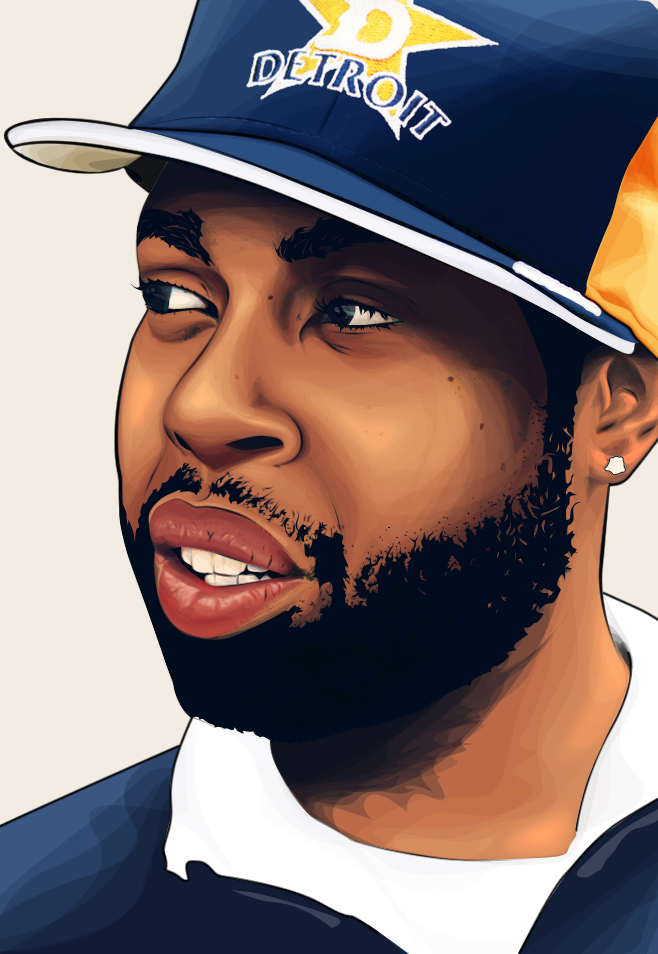
J Dilla by Jed Cablao (Deviant Art)

I happened to be on Soundcloud the other day just randomly checking for music, and I came across one of DJ Jazzy Jeff's sets. I'm more familiar with his work as an actor on "The Fresh Prince of Bel Air", but the originator of the Transformer scratch is an actual practising DJ. The set he was playing was a tribute to J Dilla; I believe "Dilla" or "Dillalude" was my original search parameter. The Dillalude was actually my introduction to musician Robert Glasper - accomplished pianist and J Dilla fanboy - who does an interesting interpretation of Common's "TheLonious" (another track produced by J. Dilla). I'm always searching for new interpretations of the Dillalude, in which Glasper manages to sneak in multiple of Dilla's productions.

Anyway, back to DJ Jazzy Jeff's "Dilla Tribute" set. It was touted as containing both his well known, lesser known and even unreleased tracks. Around the quarter mark, DJ Jazzy Jeff starts playing an obviously older track that had a haunting Oboe intro that segued into this rapid keyboard rhythm accompanied by light rapid fire drums. This gave way to the graceful female singer who sings a difficult quick tempo part; shortly after, the rest of the band joins in the singing of the chorus, adding great shades of harmony to the whole effort. And then, it happens: Jeff starts to fade out the track, and appears to be modulating the track as another male voice starts to drop the intro to a rap song. Then the heavy bassline drops and the rap song continues buoyed by the looped modulated chorus motif from the previous band.

With a bit of an assist from the Shazam app, I was able to swiftly pin down both tracks. "Knowing when to Leave" (from The Burt Bacharach Medley) by the Carpenters and "Yum Yum" by Slum Village. Great work by Dilla on the sampling job, but the final product seemed a bit raw because the bass guitar he added to the mix seems a tad overpowering. Also, the vocals seem a bit washed out (probably a recording issue). The Carpenters on the other hand are a whole other story. Karen's vocals are unmatched, and coincidentally she also plays the drums on the track. Richard is light, swift and enchanting on the keys. However, while Dilla samples their track, the Carpenters are actually covering someone else's music. Yep, Burt Bacharach & Hal David to be exact. When they originally made this track, they had frequent collaborator Dionne Warwick doing the singing.

From reading up on some of the comments about the Carpenters' video on Youtube, I found out that President Obama had a night of music at the White House which honoured Burt Bacharach (& Hal David posthumously) with the 2012 Library of Congress Gershwin Prize for Popular Song. Conveniently, the whole performance was on Youtube and was a star-studded affair in which various musicians (Stevie Wonder, Diana Krall, Arturo Sandoval, Sheryl Crow, Mike Meyers? et al) took turns in singing Bacharach/David hits. You have to witness how much virtuosity one person can plug into playing the harmonica when you get to experience Stevie Wonder's extended solo on "Alfie". However, my highlight from the whole event was Sheléa and Arturo Sandoval on "Anyone Who Had a Heart"

I'm surprised I'd never heard of this ballad before because it has done quite the rounds. Originally performed by frequent Bacharach/David alum Dionne Warwick, it has been covered by many an artist, with each artist making the song their own. No proof of this is more evident than in Luther Vandross' rendition of the ballad. To her credit, Sheléa also make this song her own. Her vocals stamp their authority on her beautiful piano playing; starting out as a mere whisper, her singing reaches a crescendo that has her sounding part Whitney Houston, part Tamia. She conveys the full range of emotion from pining to hurt to desperation, and she'll leave you engrossed. A sprinkling of Mr. Sandoval's horn brings the full melancholy into this song. The Bacharach/David team certainly deserved to be feted for just this gem alone.

It certainly proved to be quite the musical marathon in one short evening. It has definitely opened up a wide range of artists and genres for me to explore. Thankfully though, between Youtube and the rest of the net, I think I'll be up to the task.

As you embark on your musical journeys, may God speed you well.  

Wednesday, July 12, 2017

The Music of Acoustic Alchemy: Red Dust & Spanish Lace

The music of Acoustic Alchemy takes me back to my Messiah College days. I discovered the group sometime in 2003 thanks to Launchcast, a great Yahoo! internet music service that is currently defunct. I run across the service during those late summer nights when I'd get off work and just spend my time online until the sun came up; it basically kept me going till I could eat breakfast, and then get some sleep.

Since my music preferences were mostly set for "Jazz" and "Easy Listening", Acoustic Alchemy eventually popped up one day...and I was hooked. I remember checking out their website, and they had this player which played the full tracks from (as far as I can remember it) two of their last albums: The Beautiful Game and Aart. Aart was my first purchase from them, and, consequently, the album I used to introduce my brothers to the group. It's notable for having one of my favourite Acoustic Alchemy songs - "Passion Play" - and in 2012, during my twin brother's wedding, the groomsmen marched in to the church to the tune of "The Velvet Swing".

Anyway, I continued to follow the group, and later that year they released "Radio Contact", which I also ended up purchasing, in addition to some of their back catalog. As luck would have it, they ended up coming to perform a concert in Pennsylvania (Reading, PA to be exact).  The concert venue was slightly more than an hour away from Messiah, but, luckily, my then-girlfriend (Heather) drove us down and we got to experience Acoustic Alchemy in all their glory. Back then they still had bassist Frank Felix in their lineup; and Eddie M. was the man on sax-duty that night (a role that had been filled by Jeff Kashiwa for the making of Aart). Otherwise, the core was the same: Greg Carmichael (strings), Miles Gilderdale (strings), Fred White (Keys) and Greg Grainger (drums).
Any of their concerts is basically a time for comedy. Anytime you have Miles ad-libbing on the mic, something funny is bound to happen. This concert bookmarks 2004 for me because I remember Miles and Frank poking fun at the whole Janet Jackson/Justin Timberlake debacle during the Superbowl Halftime show.

The tracklist consisted of a diverse bunch of tracks, some from Aart, The Beautiful Game, and of course, Radio Contact. However, towards the end, Greg went into an extended flamenco guitar solo that had me hypnotized. The tune felt somewhat familiar, but I wasn't sure I had actually encountered it. He put on a wonderful show in that solo, with so many emotions explored in the fast/slow ebb and flow of his notes, taking you on along for the ride; and just when I thought he was done, he starts playing double-time, and then they ended up segueing from the guitar solo into a more rapid flamenco infused piece by the whole band; I use the word "infused" because it is flamenco-nuanced. Actually, one of the guitars (Greg's Nylon) starts out in flamenco, but eventually he ends up switching to his more traditional playing style, with the band providing some flamenco riffs here and there. This is actually one of those long-form songs (not typical of their style), which starts out one way and then totally morphs into something unexpectedly new.

I remember that at the end of the concert they asked us if we had any requests that they'd want us to play. It was a free-for-all, and people pretty much shouted their favourites. Wish I could have been more emphatic in asking for "Passion Play", but instead they went with a wonderful version of "Flamoco Loco" that included a solo by drummer Greg Grainger which delved into an interpolation of Michael Jackson's "Billy Jean" before finally climaxing as Flamoco Loco. (In retrospect, maybe I shouldn't have asked for a song that needed a vocalist to hum along; but from a few videos on Youtube, I now see that they've decided to forgo the vocalist and still make an attempt to play it live).

In what must have seemed an injustice to me at that time, by the end of the concert they neglected to announce what the name of the flamenco song that they'd performed was; didn't even leave a hint in terms of which album it was from (and by this point in their careers, they were 13 albums deep). So I was left to track down things the old-fashioned way: listening to the CD track sampler on Amazon.com. Eventually, I found it: the title track from their very first album, Red Dust and Spanish Lace. Listening to the track, even now, brings back that subtle memory of that wintry night in Reading, PA, and the effervescent joy of knowing that beyond the enchanting solo (which is half of the song's length) lies a veritable feast in terms of good music.

The whole album is a masterpiece (and I'll get down to some of the standout tracks in due time), but it is its final track which is a true showstopper.

God Bless